

20 JUL
The living room is the heart of the home and one of the most representative spaces in an interior design project. With living room wallpaper, it is possible to define a focal point, visually adjust the proportions of the space, and create a cohesive dialogue between furnishings, lighting, and materials. From the wall behind the sofa to the TV area, from panoramic designs to more subtle textures, this guide brings together criteria and ideas for designing a personal and balanced living space.
Living Room Wallpaper as an Architectural Element
In the living room, the wall is more than just a backdrop. It serves different functions, interacts with important pieces of furniture, and contributes to the first impression of the entire home. Wallpaper can transform it into a true design element: it can define the conversation area, highlight a piece of furniture, follow the line of a staircase, or create continuity between the living and dining areas.
The most effective choice comes from considering the space as a whole. Dimensions, ceiling height, exposure, flooring, and the presence of fixed architectural elements determine the type of design and the surface to be covered. A customized project makes it possible to position the design correctly in relation to the sofa, television, shelves, and openings, preventing the main elements from being covered.
Wallpaper Behind the Sofa: A Striking Backdrop
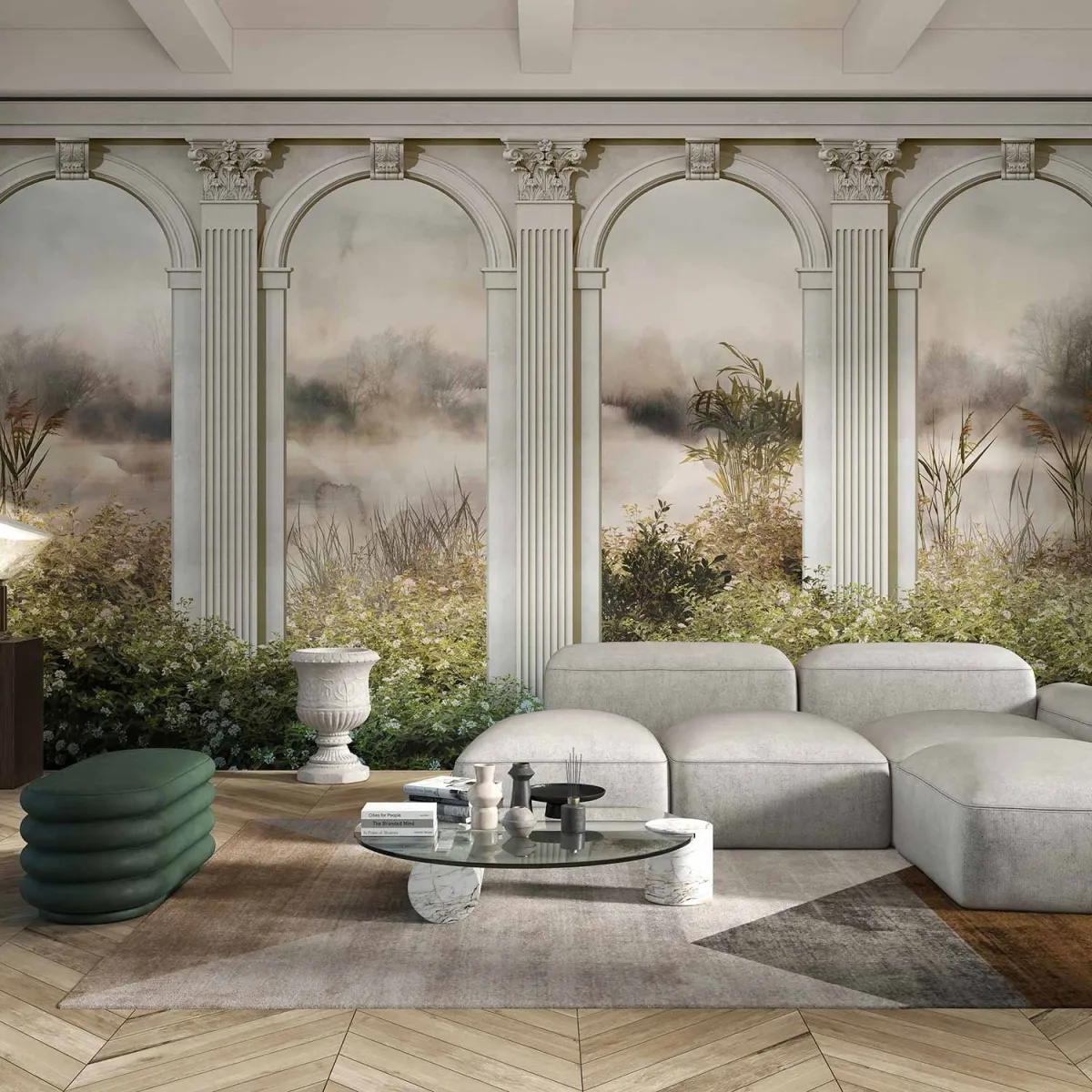
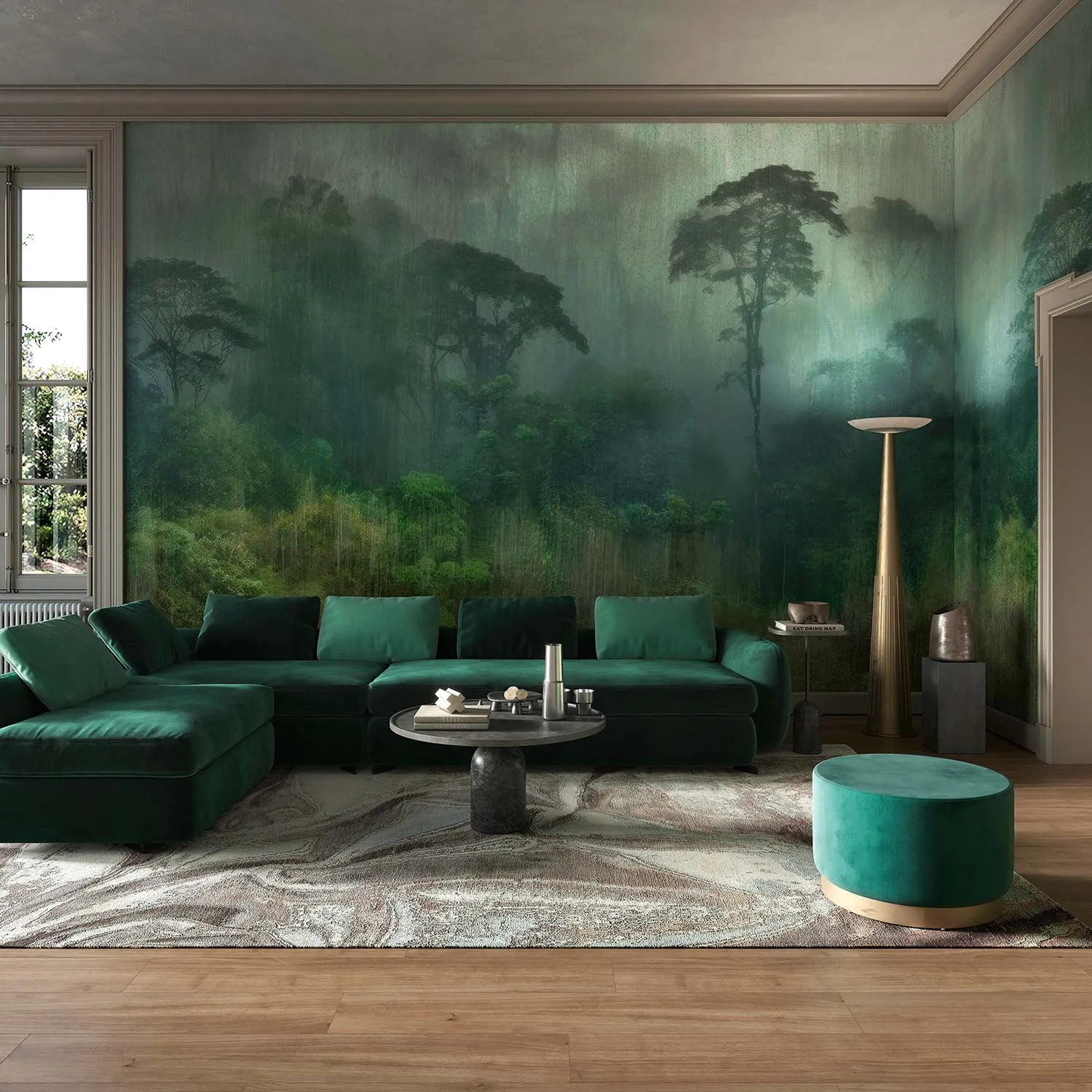
Wallpaper behind the sofa is ideal for a panoramic or artistic composition, as this area often provides a large and relatively unobstructed surface. Here, wallpaper can become the backdrop for the entire conversation area, creating depth and guiding the eye.
The scale of the design should be proportionate to the width of the sofa and the available wall height. A design that is too small may get lost, while one that is too concentrated can compete with artwork and accessories. When using a striking panoramic wallpaper, it is often preferable to limit overlapping decorations and allow the wall itself to become the main visual artwork.
Ideas for the TV Wall
The TV area requires a particular balance. Among the different TV wall ideas, the design should enhance the furniture and integrate the screen without creating excessive visual stimulation. Textured surfaces, stone effects, abstract compositions, and geometric patterns with controlled contrast are particularly suitable.
A dark wallpaper or one with deep tonal variations can reduce the contrast between the switched-off screen and the wall, making the TV less visually dominant. Conversely, light and uniform backgrounds can make a composition with wall-mounted furniture feel lighter. When decorative panels, niches, or integrated lighting are present, wallpaper can be combined with them to create different layers of texture and depth.
Choosing the Right Wallpaper Style for the Living Room
Modern Wallpaper for the Living Room
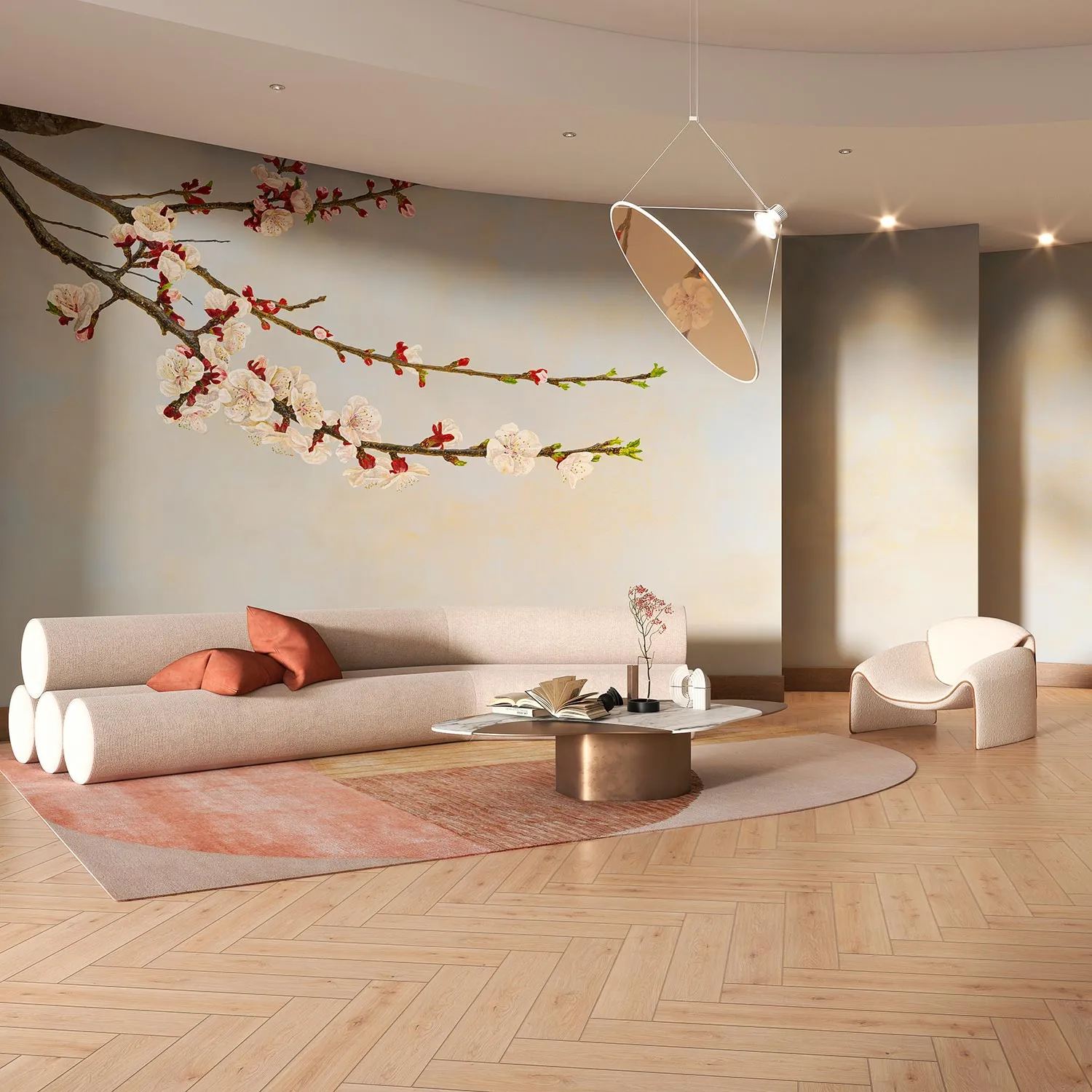
Brushstrokes, gradients, mineral textures, and fluid compositions are well suited to a contemporary living space. Modern living room wallpaper introduces movement without tying the room to a specific figurative language.
Geometric Wallpaper
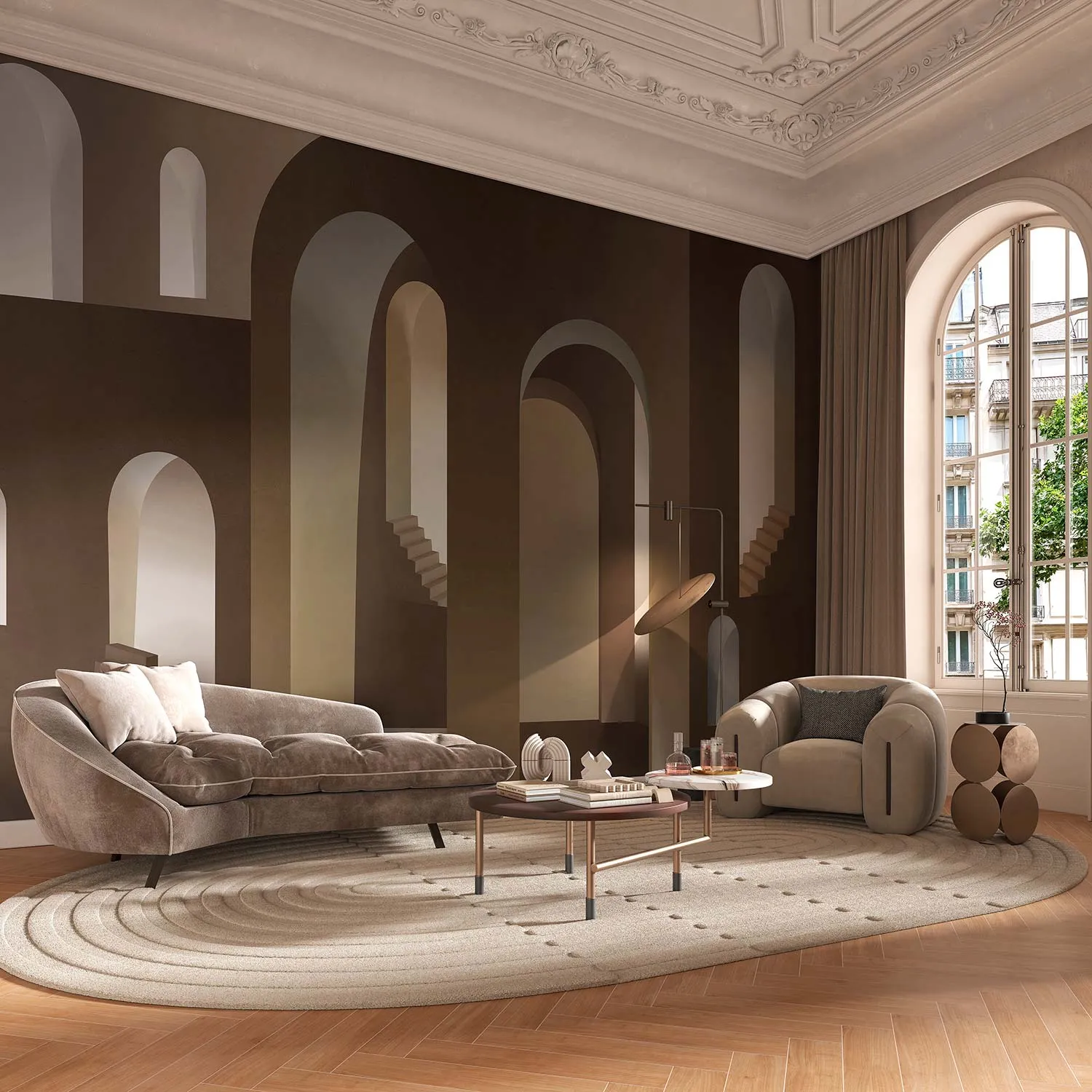
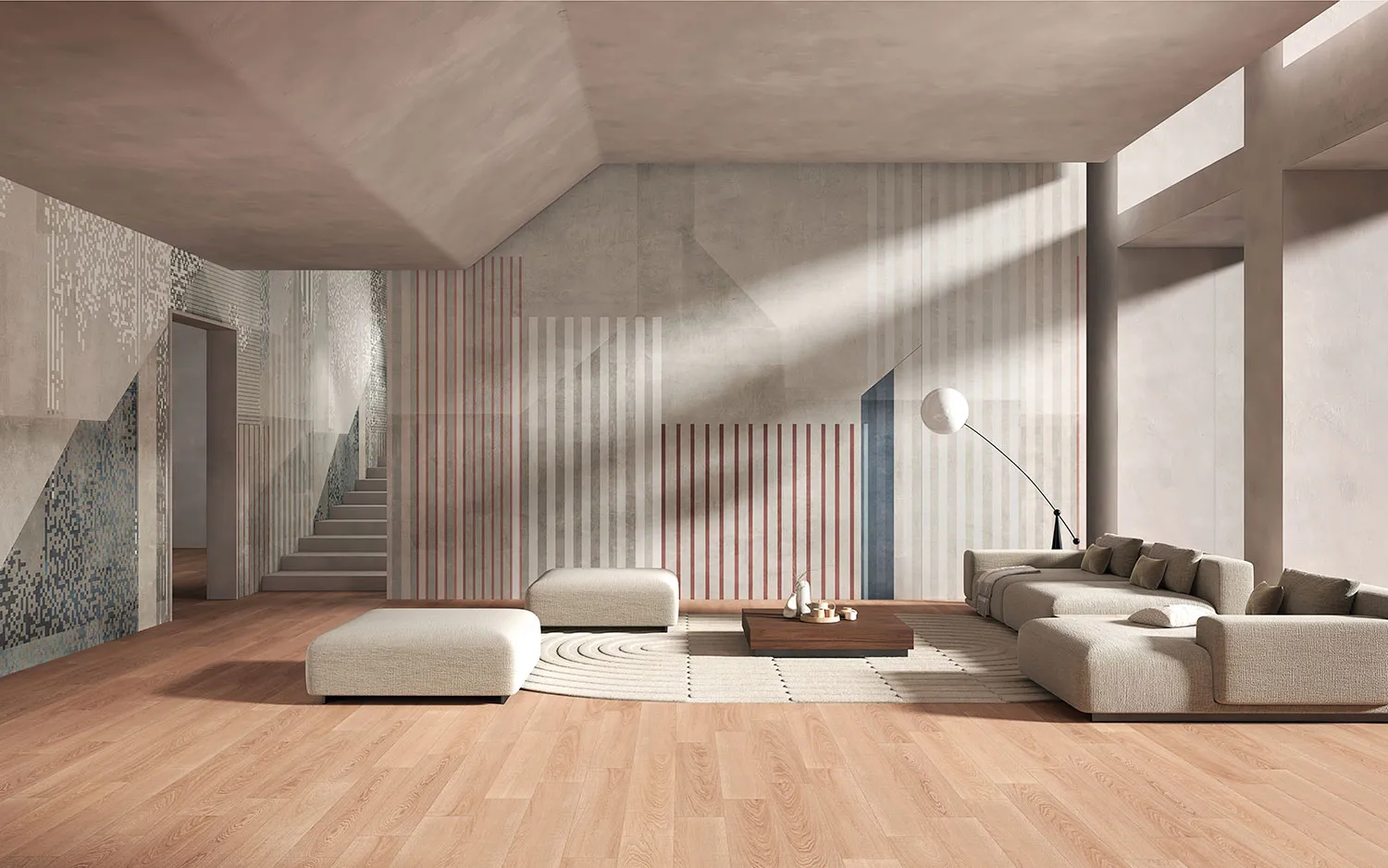
Lines, arches, and modular patterns create rhythm and order. Geometric modular wallpaper with large-scale modules works effectively on prominent walls, while smaller modules can be used to cover niches or selected portions of a wall.
Botanical and Landscape Designs
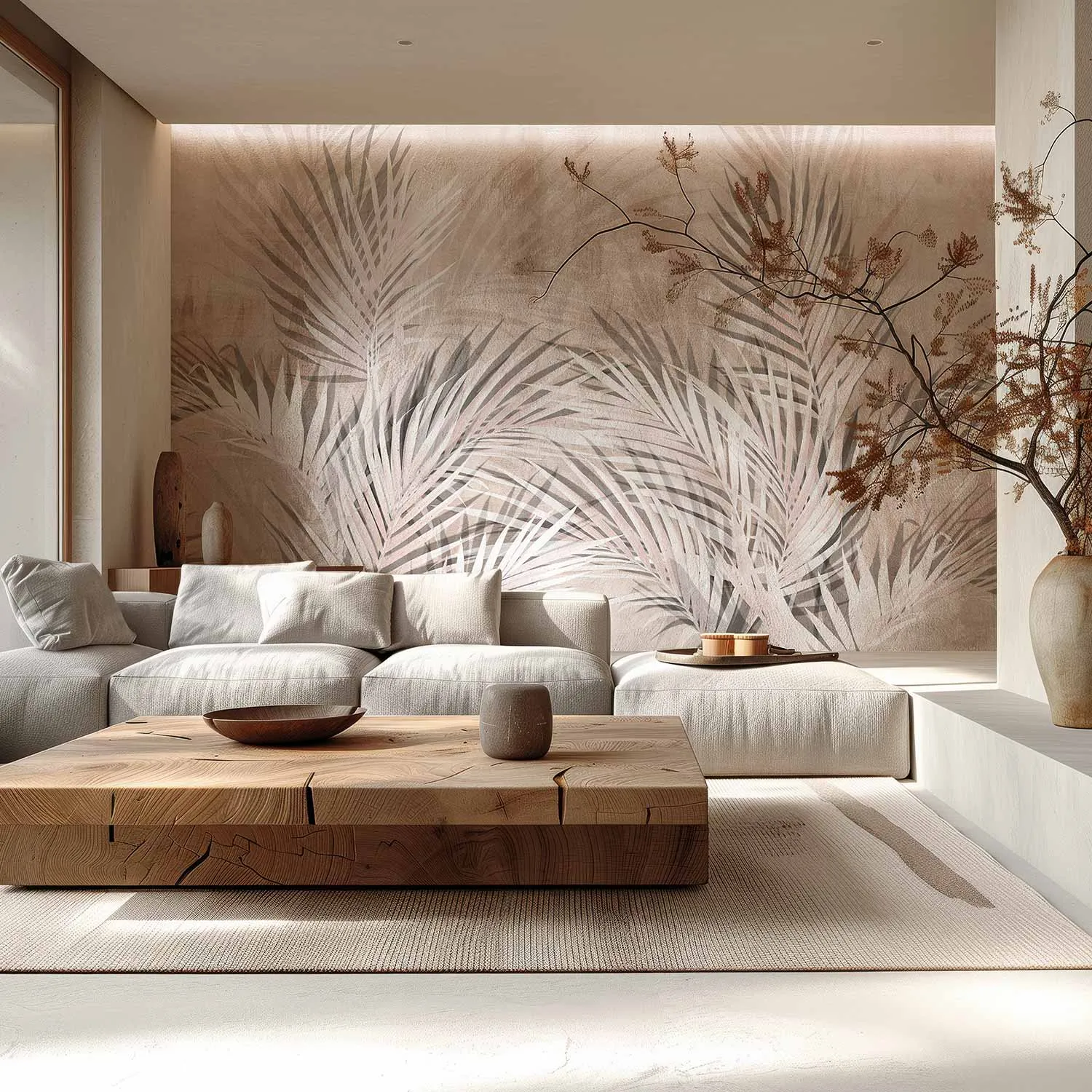
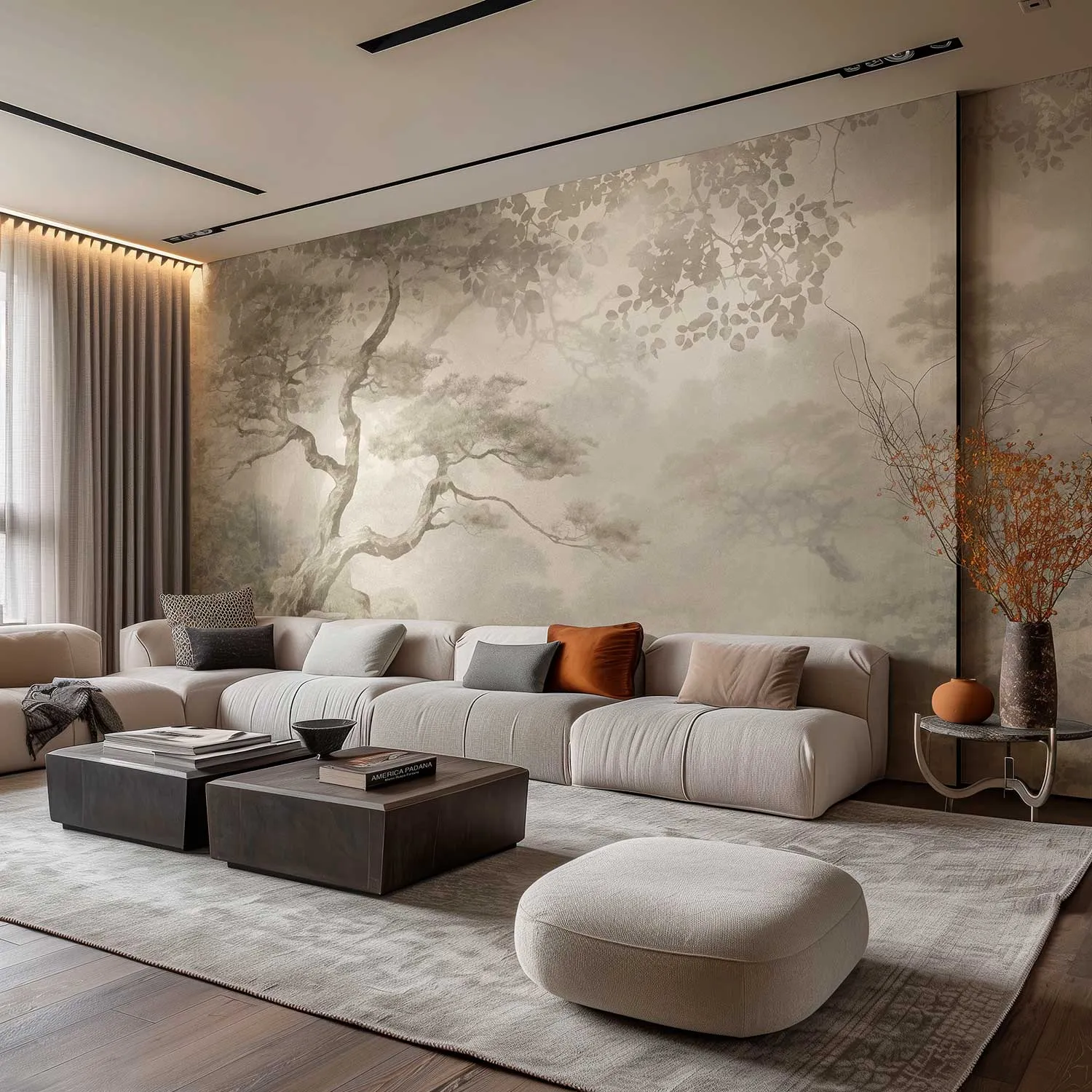
Vegetation, leaves, and landscapes bring a natural dimension into the living area. Green and earthy palettes pair well with wood, stone, and textiles, while darker versions create dramatic and sophisticated atmospheres.
Textured and Elegant
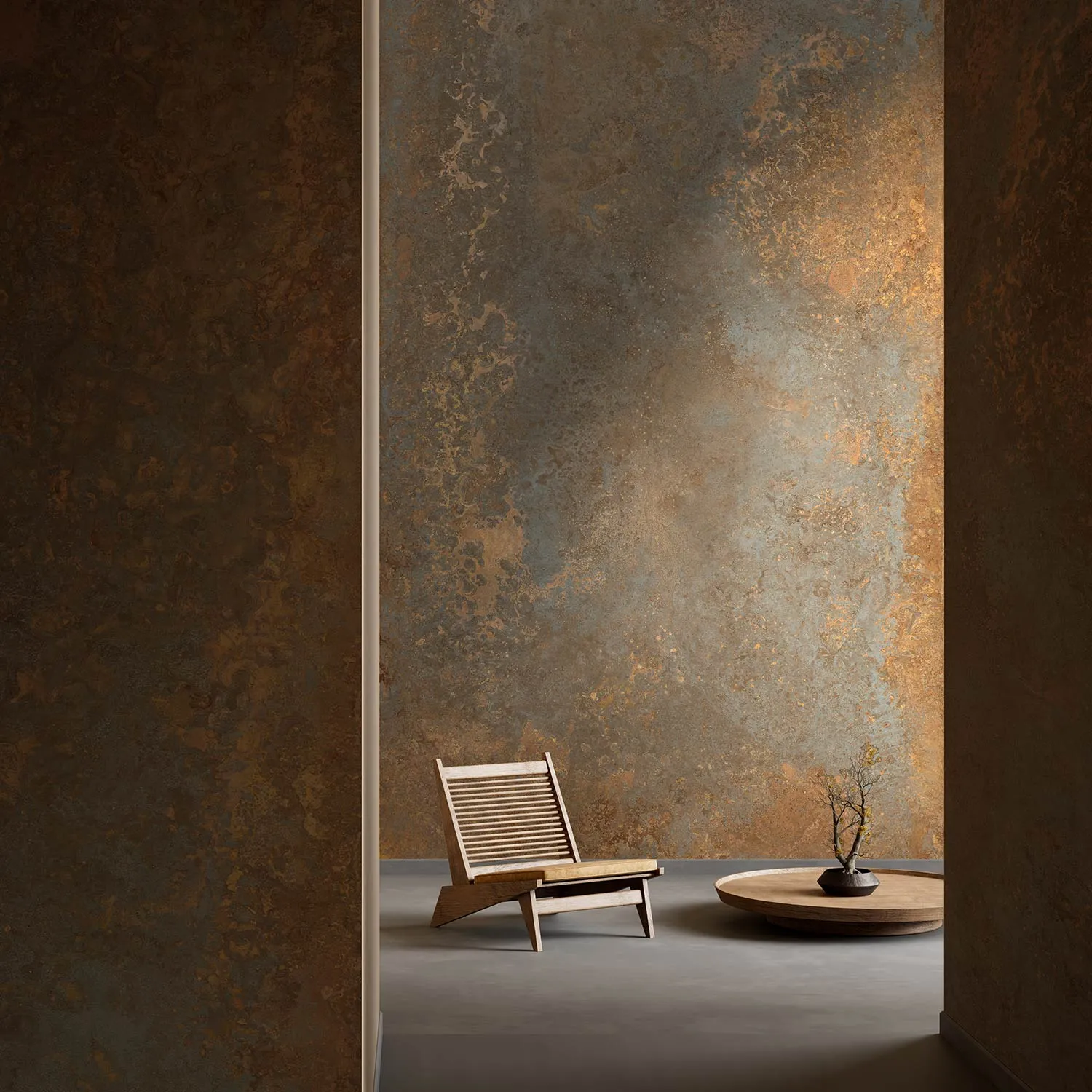
Effects inspired by marble, stone, concrete, metal, and fabric add depth to the surface. This type of elegant wallpaper integrates easily with contemporary furnishings and is ideal when you want to add character without introducing an obvious narrative subject.
Artistic and Maximalist
Artist-designed graphics, saturated colors, and rich compositions transform the living room into a highly distinctive space. To maintain balance, they work best when paired with clean-lined furniture and a controlled color palette.
Wallpaper and Living Room Size
In small living rooms, there is no need to give up a bold design. Subjects featuring perspective, translucent layers, and tonal transitions can increase the perceived sense of depth. Very dense, high-contrast compositions, however, require greater care, especially when applied to multiple walls.
In larger living spaces, wallpaper can help visually bring the room together and define different areas. A wall covering behind the sofa identifies the conversation area, while a second coordinated texture can characterize the dining area. The goal is not to fill every wall, but to establish clear visual hierarchies.
Accent Wall, Multiple Walls, or a Total Look?
An accent wall in the living room remains the most versatile solution, especially when the design is panoramic or highly impactful. Covering two adjacent walls can create an enveloping effect and reinforce continuity between the living and dining areas. A total look works well with textures, regular patterns, or designs created to wrap around the space without overly abrupt visual interruptions.
Another option is to combine wallpaper with paint. A shade taken from the wallpaper design can be used on the remaining walls, wall paneling, or custom-made elements. This approach ties the entire room together and makes the wall covering part of a broader composition.
Coordinating Wallpaper, Furniture, and Materials
The relationship between the wall and the furniture is essential. A rich design is enhanced by simple sofas and storage units, while a more understated wallpaper can become the backdrop for sculptural furniture, artwork, and colorful accessories. Wood, metal, stone, and textiles should ideally echo at least one color or textural quality found on the wall.
The flooring also influences the choice. With highly veined or decorative surfaces, a more controlled wall covering is preferable; with uniform flooring, there is more freedom to experiment with complex patterns and subjects. Considering the room as a whole helps avoid random overlaps and keeps each element visually distinct.
The Role of Light in the Living Area
Natural light changes the perception of wallpaper throughout the day. Matte finishes absorb reflections and maintain a more uniform appearance, while pearlescent or metallic surfaces react to the viewing angle and create dynamic variations. In a very bright living room, colors may appear lighter; in a north-facing room, warm tones and soft textures can help balance cooler light.
Artificial lighting can highlight the design with adjustable spotlights, grazing light, or indirect LED profiles. A well-lit decorative wall gains depth, while overly focused lighting can create unwanted reflections. For this reason, the finish and lighting design should be considered together.
Wallpaper and Decorative Panels in the Living Room
Wallpaper and decorative panels for the living room can coexist within the same project, helping differentiate functions and surfaces. A soft design can wrap around the sofa area, while aluminum or glass panels can define the TV wall, fireplace, or an architectural feature. Coordinating the same image across different materials makes it possible to maintain visual continuity while selecting the most appropriate technical solution for each area.
Ultralight rigid panels are particularly interesting when covering furniture, doors, niches, or surfaces subject to more frequent contact. The combination creates a layered living space in which material, graphics, and light work together.
Customization and Tailor-Made Design
Every living room has different dimensions and constraints. Customization makes it possible to adapt the design to the wall, reposition focal points, and coordinate colors with the overall project. The composition can be developed in relation to the sofa, TV unit, shelves, and openings so that the design remains balanced even after the furniture has been placed.
For residential and contract projects, support from the graphic design department also makes it possible to develop color variations or exclusive designs. Wallpaper thus becomes a surface genuinely designed for that specific space, rather than a standard element simply applied to the wall.
Frequently Asked Questions
Where Should Wallpaper Be Placed in the Living Room?
The most common locations are the wall behind the sofa and the TV area. The choice depends on the focal point of the room, the furniture layout, and the lighting. A dining-area wall, a niche, or even a stairwell can also become a strategic surface.
Can You Use a Bold Wallpaper in a Small Living Room?
Yes. A large-scale design with depth and a well-balanced composition can visually expand the space. It is advisable to avoid an excessive concentration of elements and to coordinate the other walls with quieter tones.
What Wallpaper Should You Choose Behind the TV?
Textured surfaces, stone or concrete effects, abstract designs, and moderately contrasting geometric patterns are particularly suitable. The wall should integrate the screen without making viewing visually tiring.
Is It Better to Cover Just One Wall as an Accent Wall?
An accent wall is the simplest and most versatile solution, but it is not the only option. Delicate patterns and uniform textures can extend across multiple walls, while panoramic or artistic designs express their character best on a focal surface.
Can Wallpaper and Decorative Panels Be Coordinated?
Yes. Different materials can be combined while maintaining the same design or a shared color palette. This makes it possible to differentiate the functions of the living area and choose the most suitable wall covering for each surface.
Creating a Personal Living Space
Explore the Tecnografica wallpaper collections for the living room and customize the design to the actual dimensions of your wall. Samples, simulations, and design support help you choose the most suitable subject, scale, and finish for your living space.