

#TecnoInspo is the editorial series designed to inspire professionals and enthusiasts in the world of architecture and interior design through 3D projects created by professionals using Tecnografica products.
When it comes to wallpaper, people often immediately think of large statement walls, spacious living rooms, and roomy bedrooms. In reality, even powder rooms, entryways, niches, hallways, staircases, built-in walls, or small corners of the home can gain depth, personality, and identity through carefully designed wall decoration.
This is precisely why wallpaper can become the central element of a project, turning a secondary wall into a focal point. The secret is not to see limited dimensions as a constraint, but as an opportunity to be bolder with greater freedom.
Small Bathrooms: The Scenic Effect of Wallpaper
The bathroom is one of the spaces where wallpaper can best express its decorative potential. Even just a few square meters can be transformed into a small immersive space, able to surprise and convey a distinct style.
Tropical, floral, abstract, or strongly decorative designs can cover a main wall, the vanity area, or the entire room, creating a boutique hotel effect. In these cases, wallpaper helps add character even to the most essential bathrooms, making them more welcoming and distinctive.
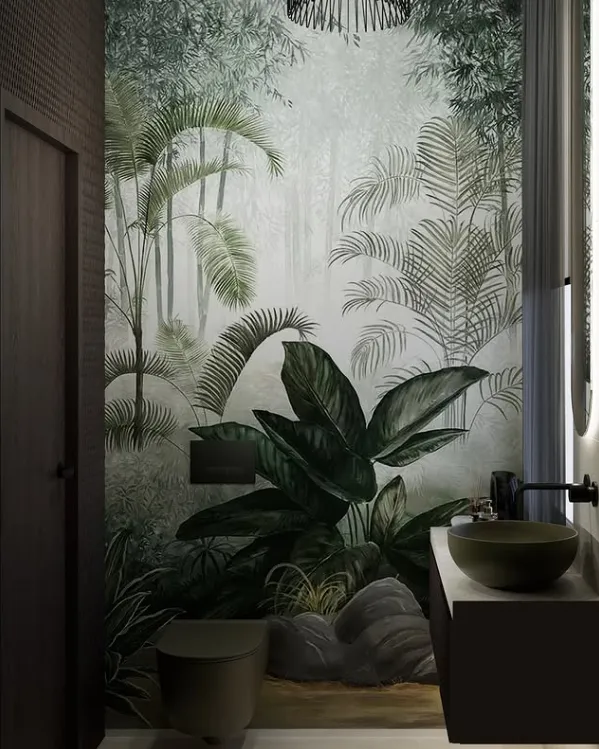
Morgan wallpaper | Project: Lakberendezo
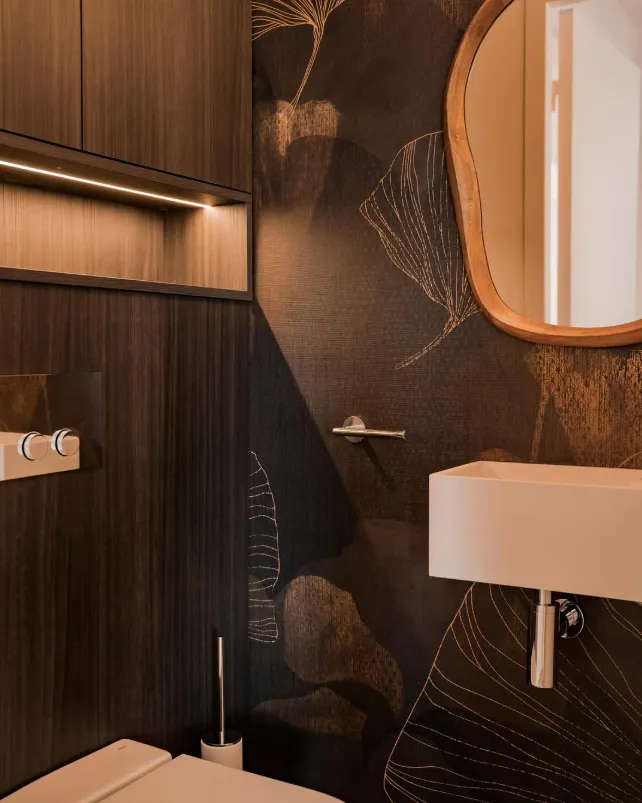
Ginko wallpaper | Project: Anne Mourot Architecte | Ph.: @parenthese__photography
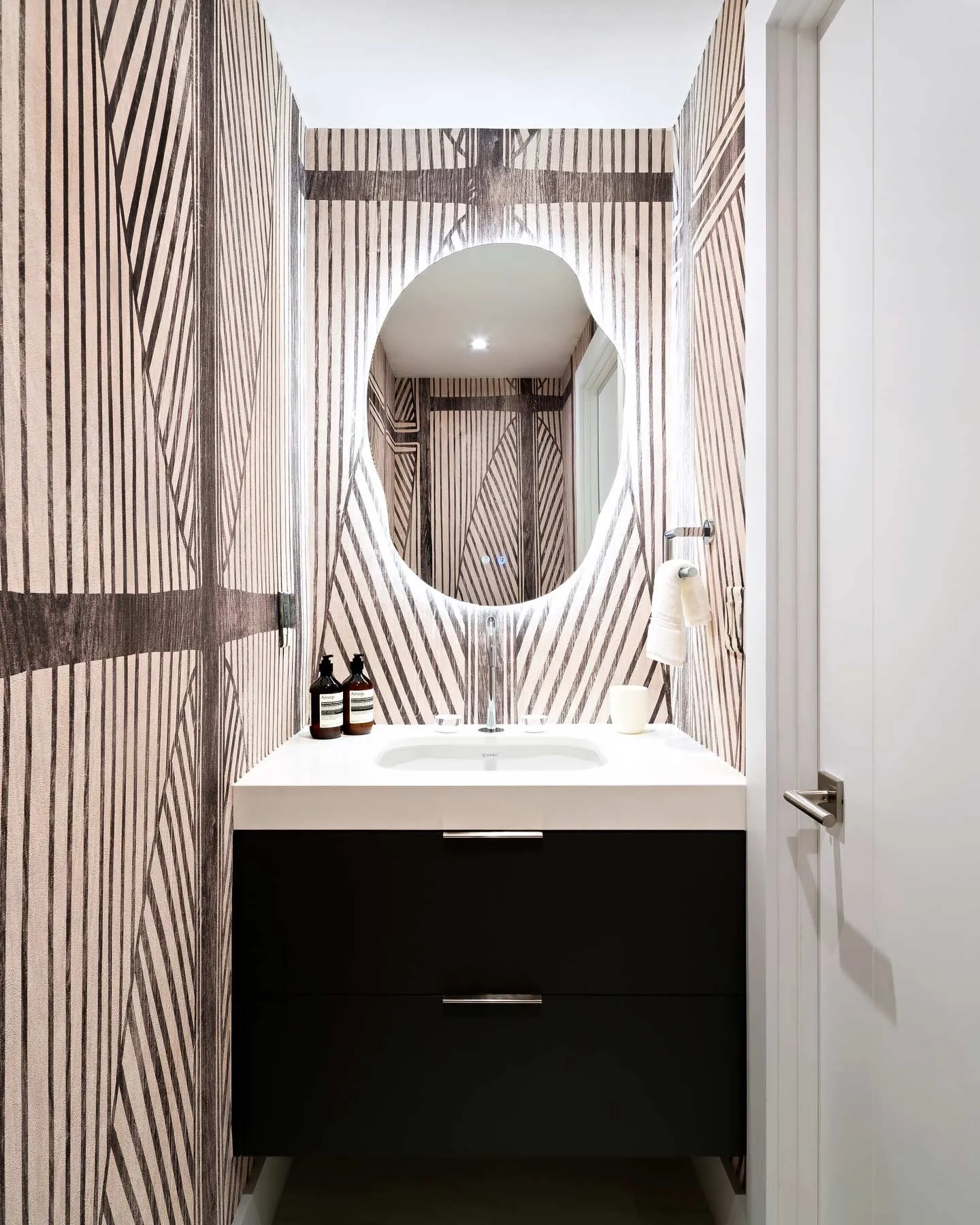
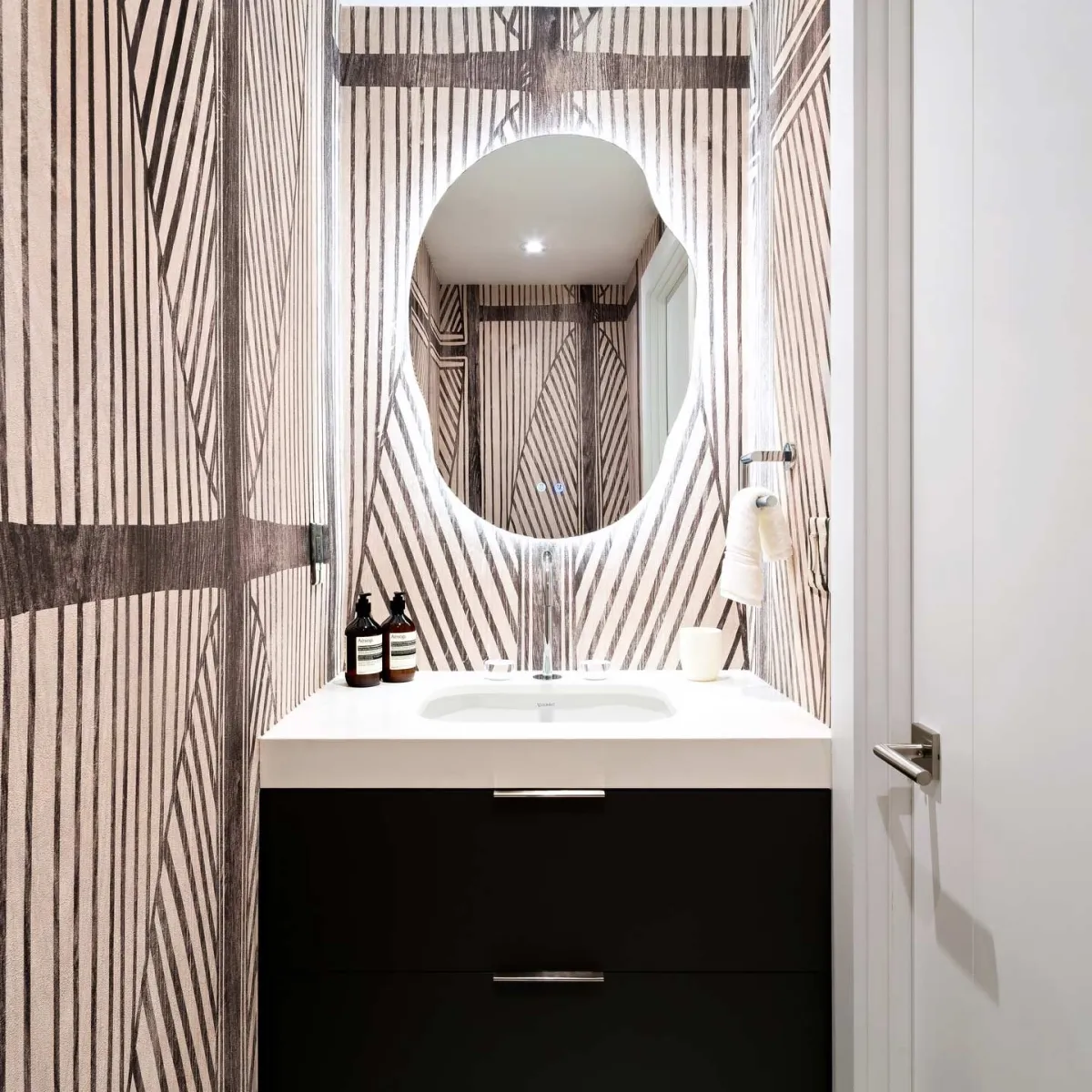
Masai wallpaper | Project: Area Studio | Ph.: Alex Tarajano
Niches, Staircases, and Passageways: Enhancing Transitional Areas
Transitional spaces are often left in the background, but they can become areas of great aesthetic value. A niche, a wall along a staircase, or a narrow entryway can be enhanced with a design that guides the eye and creates visual continuity.
In these contexts, wallpaper becomes almost like a scenic backdrop: it frames the space, guides perception, and transforms a functional area into a decorative element.
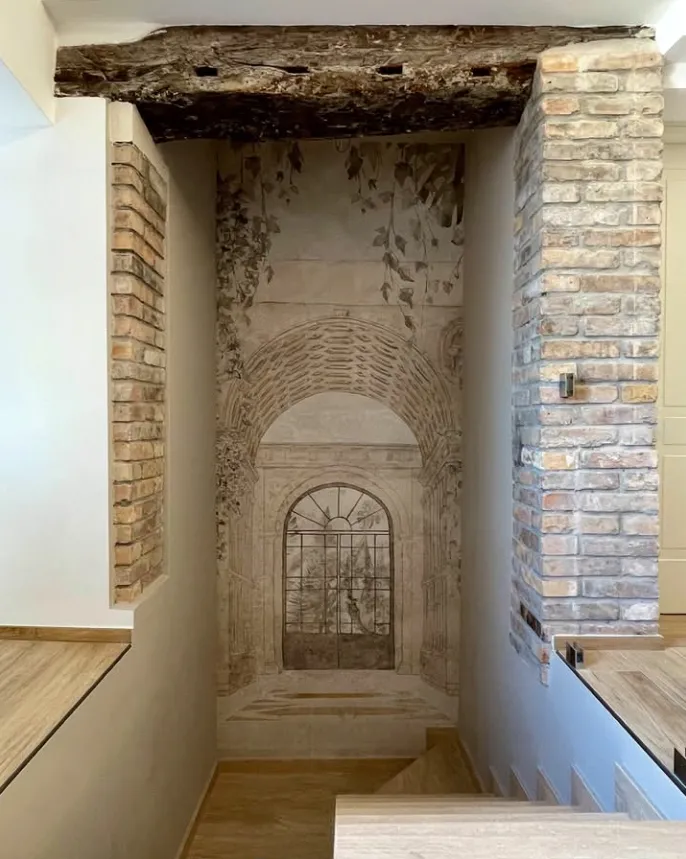
Buen Retiro wallpaper | Project: Raggini, LM Tinteggiature
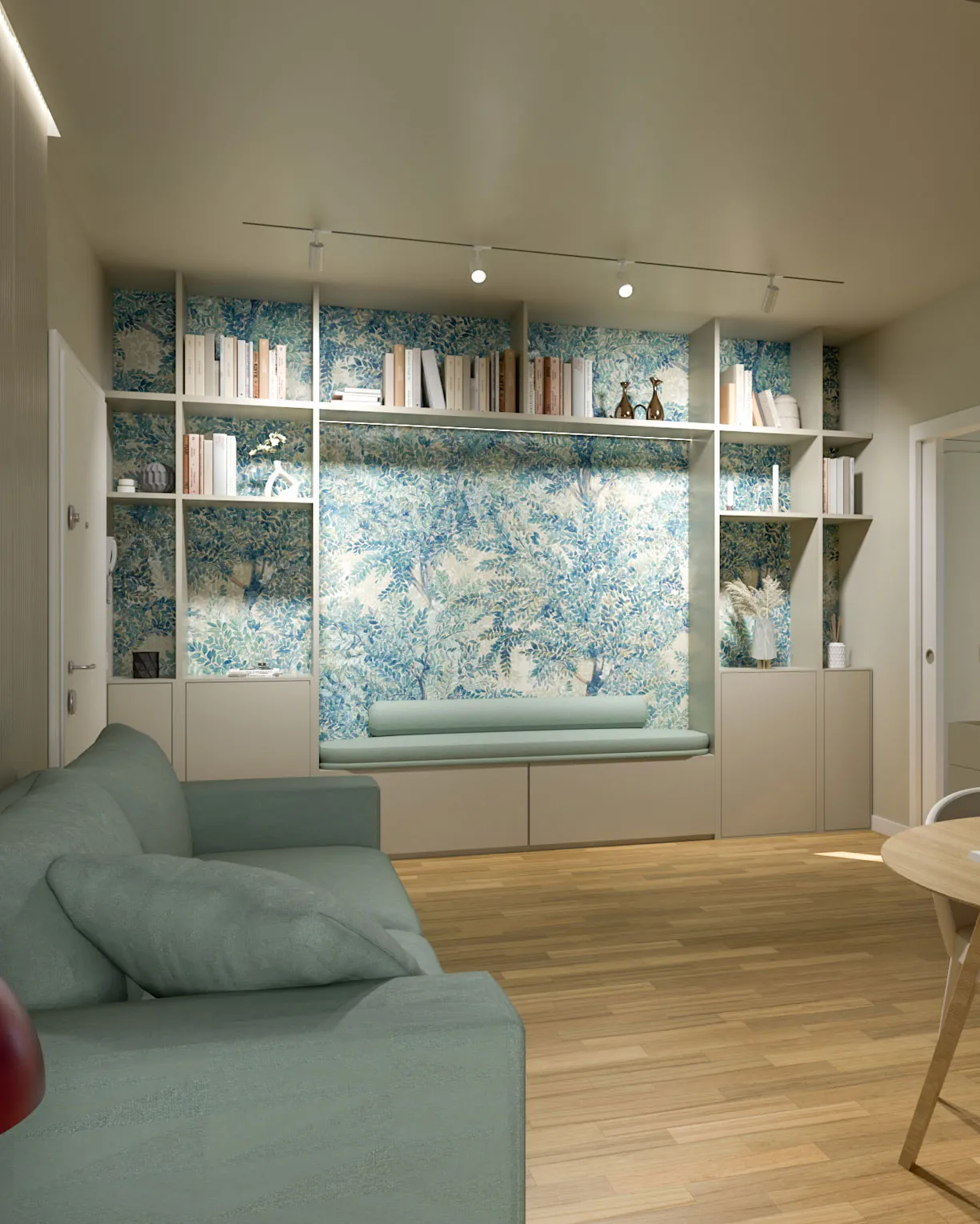
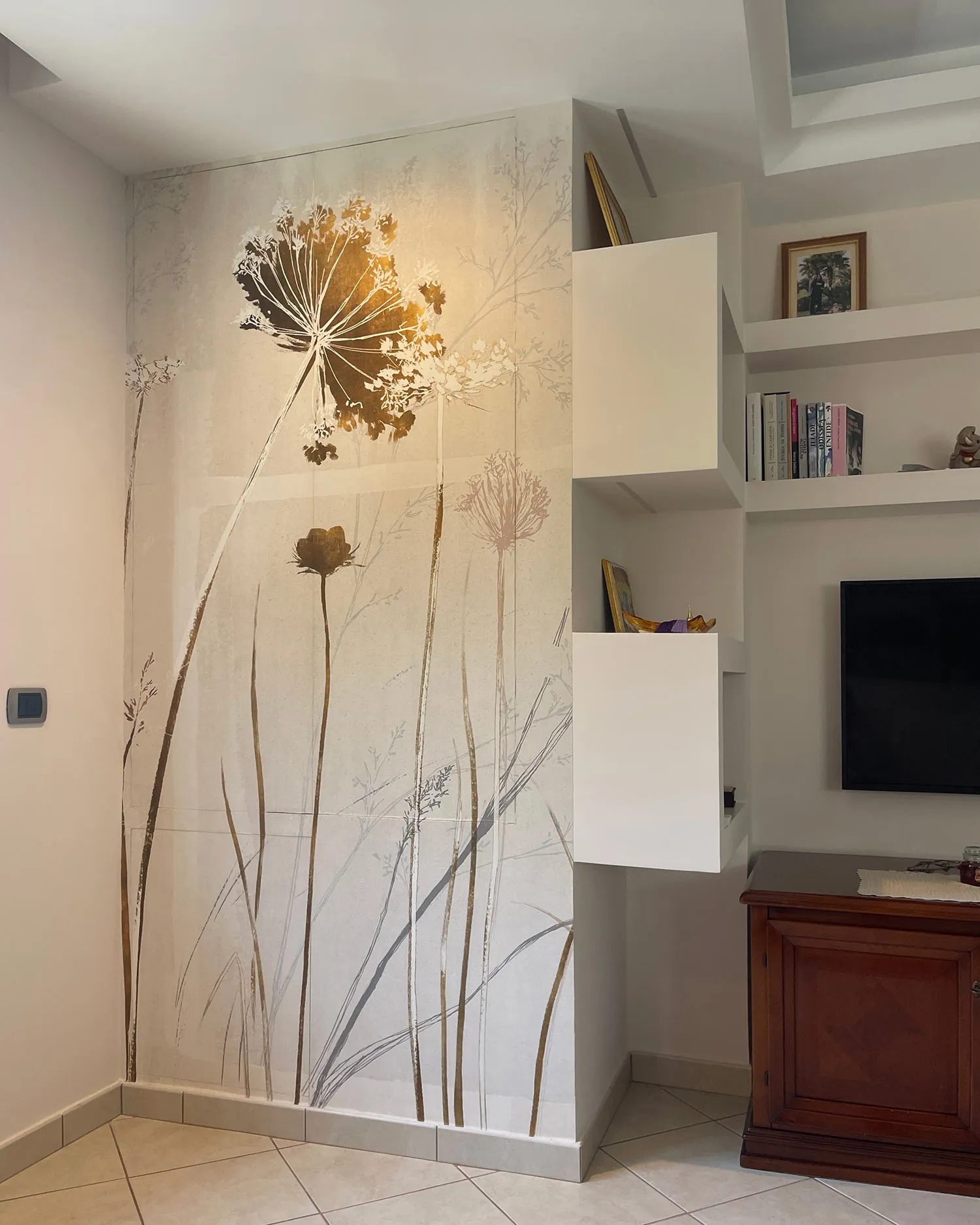
Espero wallpaper | Private project
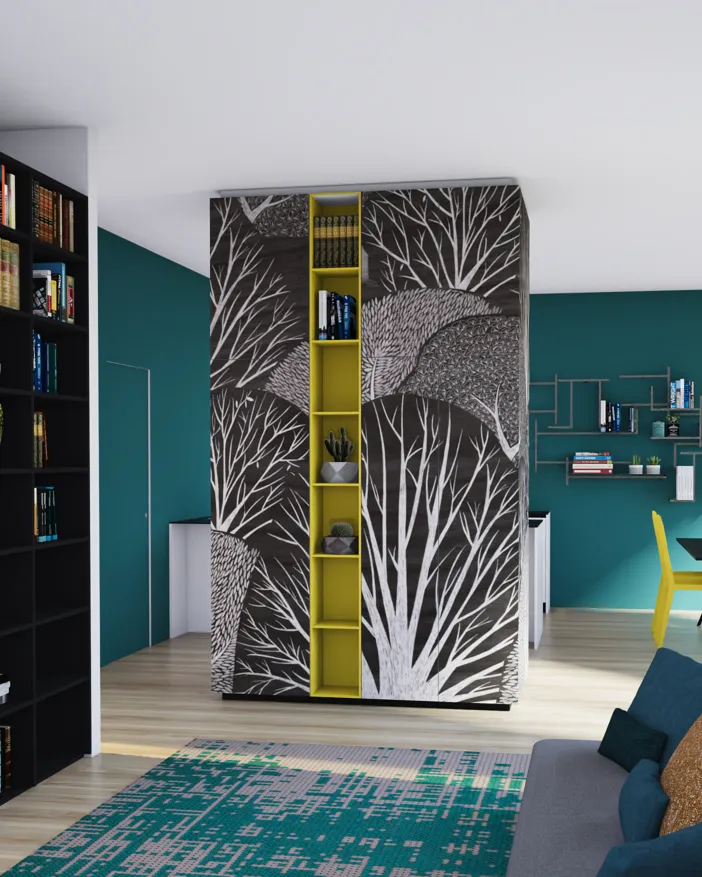
Ki wallpaper | Project: Artheco
Choosing the Right Design
In small spaces, there is no single rule that works for everyone. Light designs can enhance brightness and make a space feel airier, while darker tones or more intense motifs can create an enveloping and sophisticated effect.
The scale of the design is also important: vertical subjects, light lines, or well-balanced patterns can visually elongate the wall, while panoramic or figurative designs turn the space into a true visual story.
The choice depends on the desired effect: opening up the space, emphasizing it, making it feel more intimate, or creating a focal point.
Wallpaper as a Custom Project
One of the main advantages of Tecnografica wallpaper is the possibility of adapting each design to the available space. Even a narrow wall, an irregular surface, or a room with integrated furnishings can be studied to achieve a harmonious and well-proportioned result.
In this way, the wallcovering does not simply decorate, but interacts with the architecture, the light, and the elements already present in the space.