

15 JUN
The bedroom is one of the spaces where wallpaper can express its transformative power most effectively. A carefully selected design can make the sleeping area feel more inviting, define the wall behind the bed, and create an atmosphere that is consistent with the style of the overall project. In this guide, we explore subjects, colors, finishes, proportions, and custom solutions for designing an elegant, personal, and visually balanced bedroom.
Why Choose Wallpaper for the Sleeping Area
The bedroom is not simply a functional space dedicated to rest. It is the most intimate room in the home, where materials, lighting, and colors should contribute to a sense of comfort and protection. Wallpaper for the sleeping area makes it possible to work with these elements in a more sophisticated way than a simple painted wall, adding depth, rhythm, and texture without requiring invasive structural work.
When designing the sleeping area, the wall covering can become the focal point or remain a subtle backdrop. A large-scale panoramic composition creates a striking focal point, while a delicate texture or regular pattern complements the furnishings in a more understated way. In both cases, the design should be adapted to the actual dimensions of the wall, the position of the bed, and the architectural elements within the space.
The Wall Behind the Bed: Wallpaper for the Headboard Wall
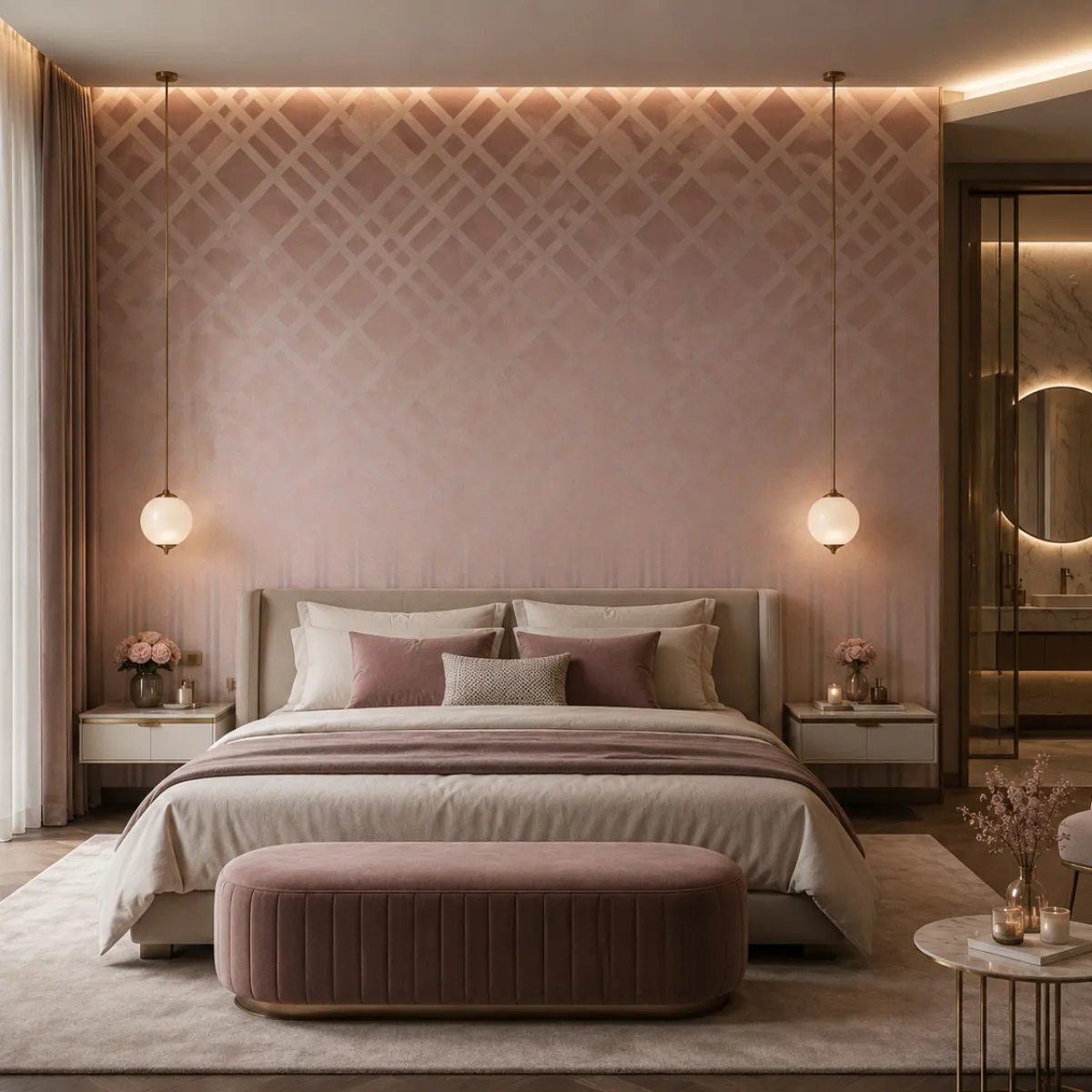
The headboard wall is the most natural location for wallpaper behind the bed. It frames the bed, can visually replace wall paneling or an oversized headboard, and makes it possible to concentrate the decorative element in a specific area while keeping the other surfaces more neutral.
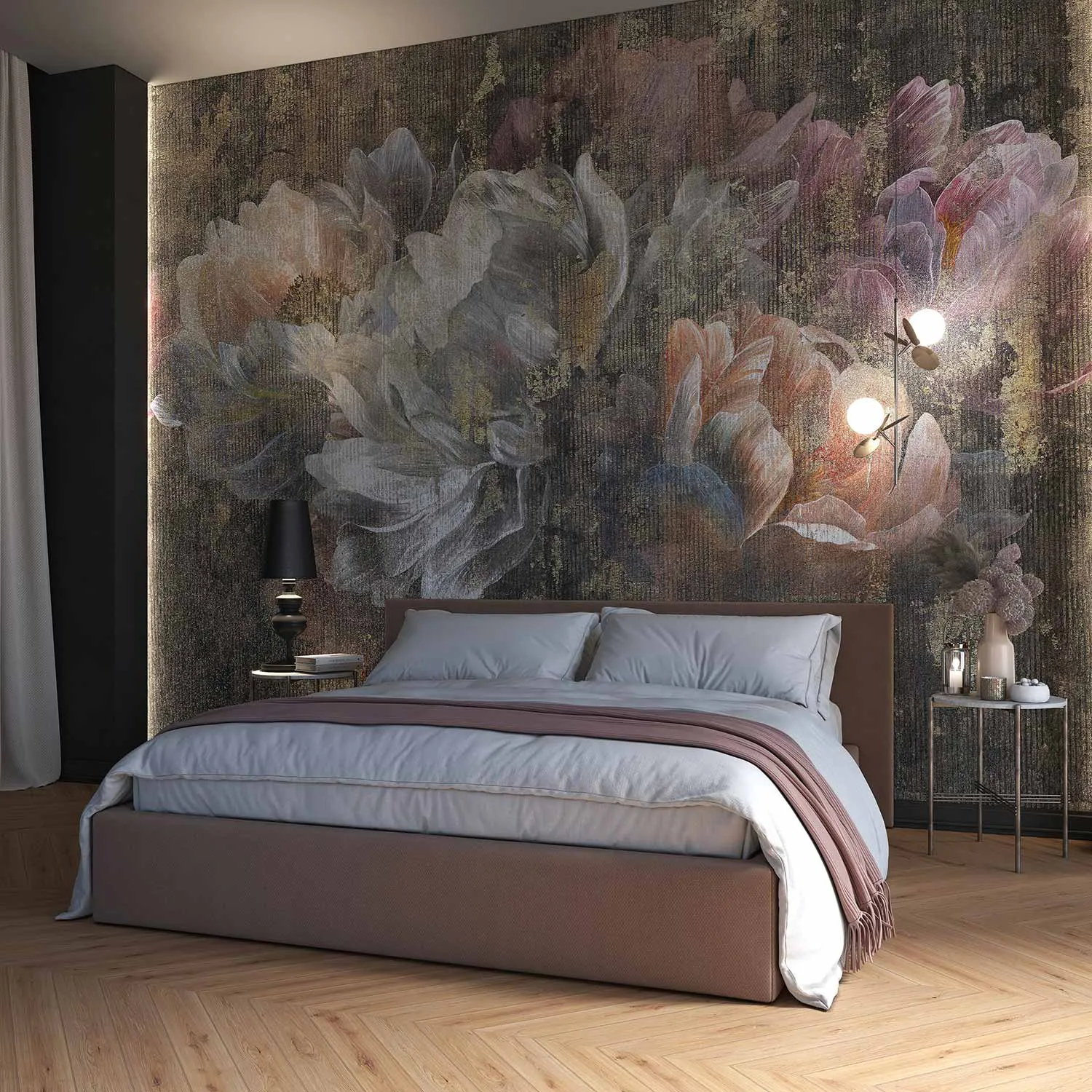
To achieve a harmonious result, it is important to consider the relationship between the design and the furnishings. The main focal point of the graphic should not be hidden by the headboard, nightstands, or lamps. With panoramic designs, custom adaptation makes it possible to reposition the most significant elements and avoid random cropping. In a spacious primary bedroom, the wall covering can extend across the entire wall; in smaller spaces, a central section or niche can create an equally effective result.
Relaxing Colors and Bedroom Palettes
When choosing relaxing colors for the bedroom, the shade itself matters just as much as the way the design distributes it across the wall.
Natural and Neutral Tones
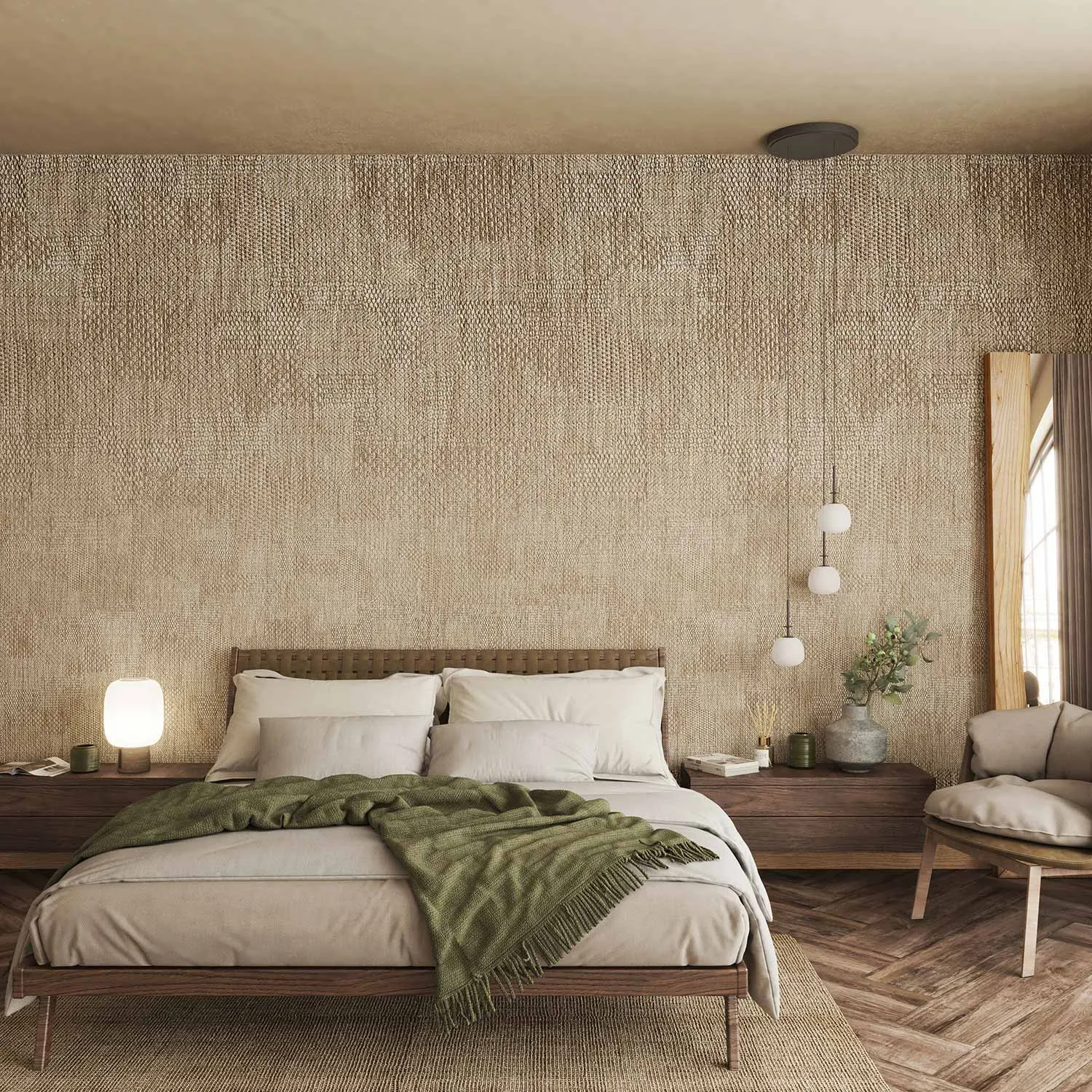
Beige, sand, taupe, warm grays, and ivory create a soft, timeless backdrop. They are ideal for minimalist, contemporary, or nature-inspired bedrooms and pair easily with wood, textiles, and warm lighting.
Greens, Light Blues, and Deep Blues
Shades inspired by vegetation, water, and sky encourage a sense of calm and depth. Desaturated versions feel softer and more delicate, while deeper blues can create sophisticated, intimate bedrooms, especially when balanced with lighter elements.
Warm Accents and Enveloping Colors
Terracotta, dusty pink, burgundy, and ochre can add personality without making the room feel overly stimulating. The key is to use them in moderation within the design and echo them through just a few textile details or accessories.
Patterns and Styles: Which Wallpaper to Choose
Floral and Botanical Wallpaper
Leaves, flowers, and natural landscapes transform the wall into an immersive presence. Floral wallpaper with large-scale subjects works particularly well as a backdrop behind the bed, while smaller motifs are suitable for romantic bedrooms or classic interiors reinterpreted with a contemporary approach.
Abstract and Textured: Modern Bedroom Wallpaper
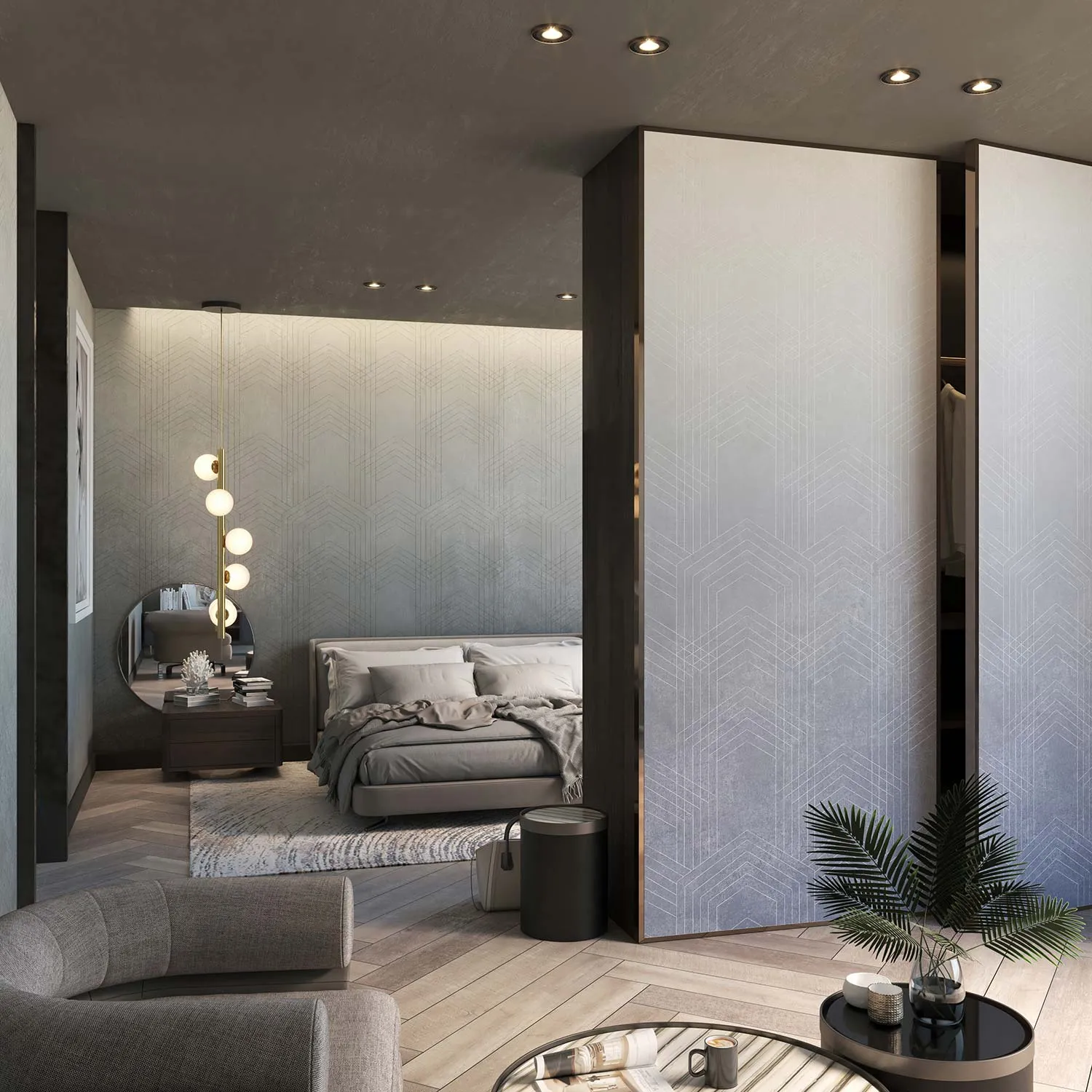
Gradients, brushstrokes, mineral textures, and effects inspired by stone, fabric, or plaster add depth without introducing a figurative subject. These are versatile solutions for modern bedroom wallpaper with an elegant, contemporary look.
Geometric and Minimalist
Lines, arches, and regular modules introduce order and rhythm. In the sleeping area, it is preferable to choose controlled contrasts and geometries that are not overly dense, helping preserve a restful atmosphere.
Landscapes and Artist-Designed Graphics
A panoramic composition can transform the bedroom into a narrative space. Forests, horizons, imaginary visions, and artworks give the room a distinctive identity and make the wall covering an integral part of the architecture.
Textured Finishes and Fabric-Effect Wallpaper
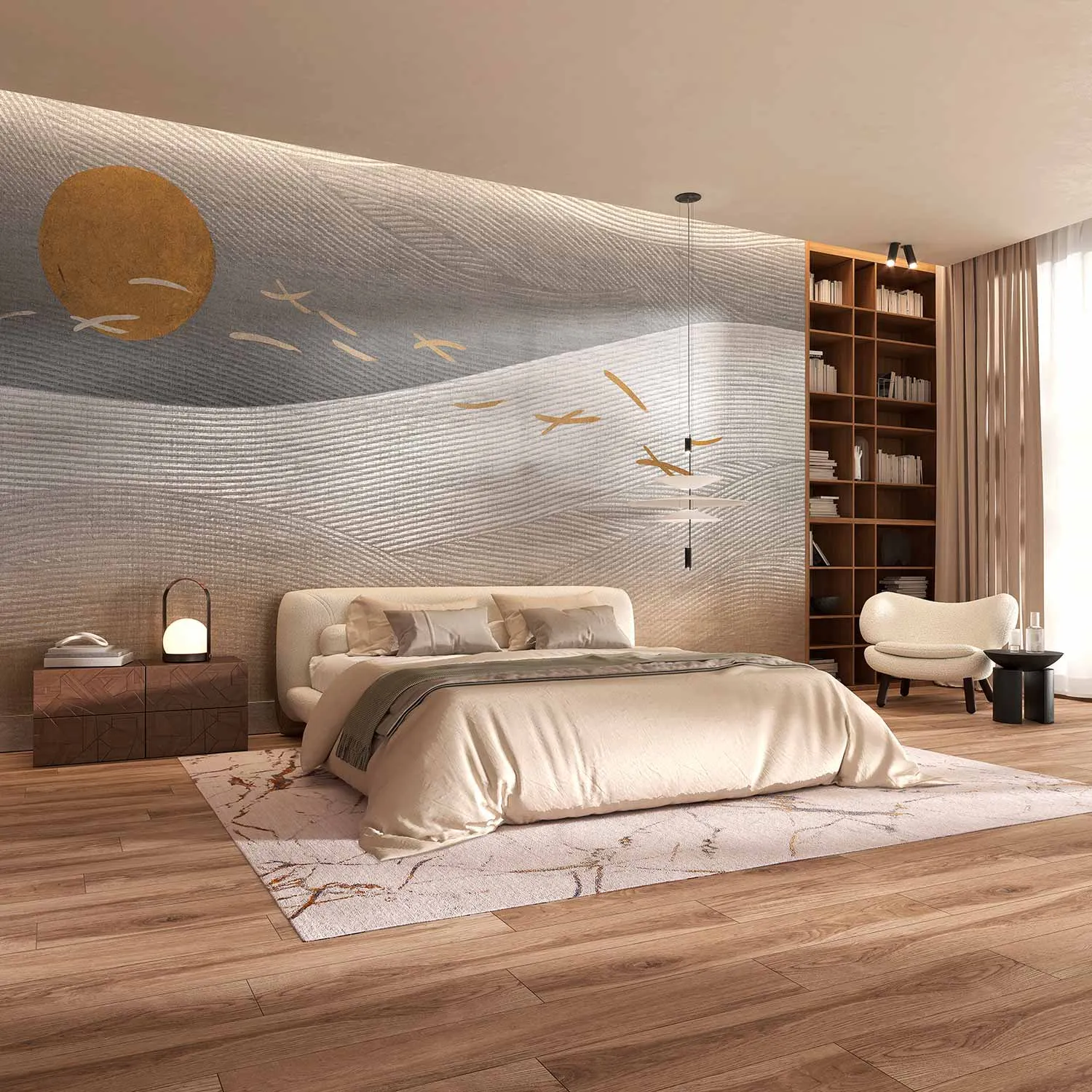
In the bedroom, the finish contributes to the overall perception of the space just as much as the design itself. Matte surfaces with a soft visual appearance reduce reflections and enhance diffused lighting. Fabric-, linen-, or silk-effect textures add an elegant tactile dimension, making them particularly suitable for headboard walls and suites.
Metallic or pearlescent finishes can be used when a more refined result is desired. In this case, lighting plays a decisive role: wall sconces, pendant lights, or grazing light can reveal different details and reflections throughout the day. The finish should therefore be evaluated together with the lighting design rather than as a separate element.
How to Adapt the Design to the Size of the Room
The scale of the design directly affects the perception of the space. A large-scale subject is not reserved exclusively for spacious bedrooms: even in a compact room, it can create depth, provided the composition is carefully balanced and does not concentrate too many elements in one area. Small, repetitive patterns create a more uniform surface but may feel visually dense when applied to every wall.
Customization makes it possible to modify the dimensions, proportions, and colors of the design according to the wall. Doors, windows, niches, and sloped ceilings can be incorporated into the project, helping keep the subject legible while enhancing the actual features of the space.
Accent Wall or Wallpaper Throughout the Bedroom?
An accent wall in the bedroom is the most immediate solution: it focuses attention on the headboard area while allowing the rest of the room to breathe. Extending the wall covering across multiple walls creates a more enveloping effect and works particularly well with delicate patterns, uniform textures, or bedrooms designed around a strongly immersive concept.
An intermediate solution is to coordinate the wallpaper with painted walls in a shade taken from the design itself. This creates visual continuity without multiplying the decorative elements. The ceiling can also become part of the composition, especially in attic bedrooms or hospitality projects with a strong character.
Lighting, Textiles, and Furnishings: Creating a Cohesive Interior
Wallpaper should not be selected in isolation. The final result depends on its relationship with the headboard, bedding, curtains, rugs, nightstands, and lighting fixtures. A complex design calls for more understated furnishings, while a subtle texture can complement furniture and textiles with stronger character.
Before production, it is useful to view a sample directly in the room, both in natural daylight and under evening lighting. Colors and reflections can change significantly depending on exposure and the color temperature of the light sources. This step helps define the finish and verify the balance between the wall covering and the surrounding materials.
From Private Bedrooms to Hotel Suites
The same design principles apply in the hospitality sector, where wallpaper can differentiate rooms, suites, and even entire floors while maintaining a coordinated identity. A custom design can reflect the local setting, the concept of the property, or a specific atmosphere, while finishes suitable for contract applications meet requirements related to durability and maintenance.
In a suite, the wall covering can continue from the sleeping area into the living space or coordinate with decorative panels, creating a continuous narrative across surfaces and functions. The wall therefore becomes a recognizable element of the guest experience.
Frequently Asked Questions
What is the best wall for wallpaper in a bedroom?
The wall behind the headboard is generally the most effective choice because it defines the focal point of the room. However, the ideal location depends on the geometry of the space, the lighting, and the presence of doors, windows, or built-in cabinetry. In some projects, a side wall, niche, or composition extending across multiple surfaces may work better.
Which colors are best suited to the sleeping area?
Natural and neutral tones, greens, light blues, and desaturated blues create relaxing atmospheres. More intense colors can also be used, provided they are incorporated into a balanced palette and coordinated with lighting, textiles, and furnishings.
Does a large-scale design make the bedroom look smaller?
Not necessarily. A well-proportioned large-scale design can increase the sense of depth and bring visual order to the wall. The final effect depends on the composition, color contrasts, and how the subject is adapted to the actual dimensions of the space.
Can the colors and dimensions be customized?
Yes. Tecnografica designs can be adapted to the dimensions of the wall and, when required by the project, customized in terms of colors or composition. This service makes it possible to enhance the sleeping area while avoiding random cropping of the design.
Which finish should I choose for an elegant look?
Matte and textured finishes are particularly well suited to the bedroom because they create a soft and sophisticated appearance. Textile-inspired or subtly luminous effects add refinement, but they should always be evaluated in relation to the lighting in the space.
Designing a Custom Bedroom
Discover the Tecnografica wallpaper collections and choose the design best suited to your sleeping area. The team can support designers and private clients in adapting the design, selecting the finish, and creating a fully customized feature wall.