

03 FEB
2026 represents a historic moment for wallpaper in interior design, with a renewed centrality in defining the identity of residential and commercial spaces. This article explores in depth the five macro-trends that are dominating the international wallcovering landscape, analysing how contemporary wall design is evolving towards increasingly sophisticated and personalised solutions. From the visual power of ultra-detailed botanical patterns to bold geometric designs from the 1970s reinterpreted in a modern key, from earthy palettes that imitate natural elements to the return of elegant maximalism, each trend is analysed with particular attention to practical applications, colour combinations and technical solutions. We'll discover how these trending wallpapers translate into concrete choices for every room in the home, offering professional advice for creating spaces that express personality, wellbeing and a profound connection with the design of the future.
1. Force of nature: lush nature conquers the walls
The first major wallpaper trend for 2026 brings nature to centre stage with unprecedented expressive force. The "Force of Nature" movement celebrates the power of flora through vibrant colour palettes dominated by intense greens and luminous yellows, creating compositions that transform walls into veritable contemporary vertical gardens.
This trend is distinguished by the use of tones ranging from emerald green to moss green, from mustard yellow to lemon yellow, often enriched with touches of burnt orange and Sienna earth. Botanical wallpaper in this interpretation doesn't simply represent plant elements, but captures the very essence of organic growth, with compositions that seem to pulse with their own life.
The most innovative brands have mastered ultra-high-definition digital printing techniques that allow every minute detail of leaves to be reproduced, from veining to chromatic nuances, creating extraordinary depth effects. These modern wallpapers are particularly well suited to creating feature walls in the living room or dining area, where they can become true architectural elements.
Application suggestions:
- Contemporary living room: use botanical wallpaper on a single wall to create a feature wall that dialogues with minimal furnishings in natural wood and natural fabrics such as linen and raw cotton
- Wellness home office: green tones promote concentration and creativity, perfect for a workspace that integrates wellbeing and productivity
- Breakfast area: energising yellow tones bring light and vitality to spaces dedicated to the morning routine, creating a positive atmosphere to start the day
2. Ultra-detailed botanical patterns: art meets nature
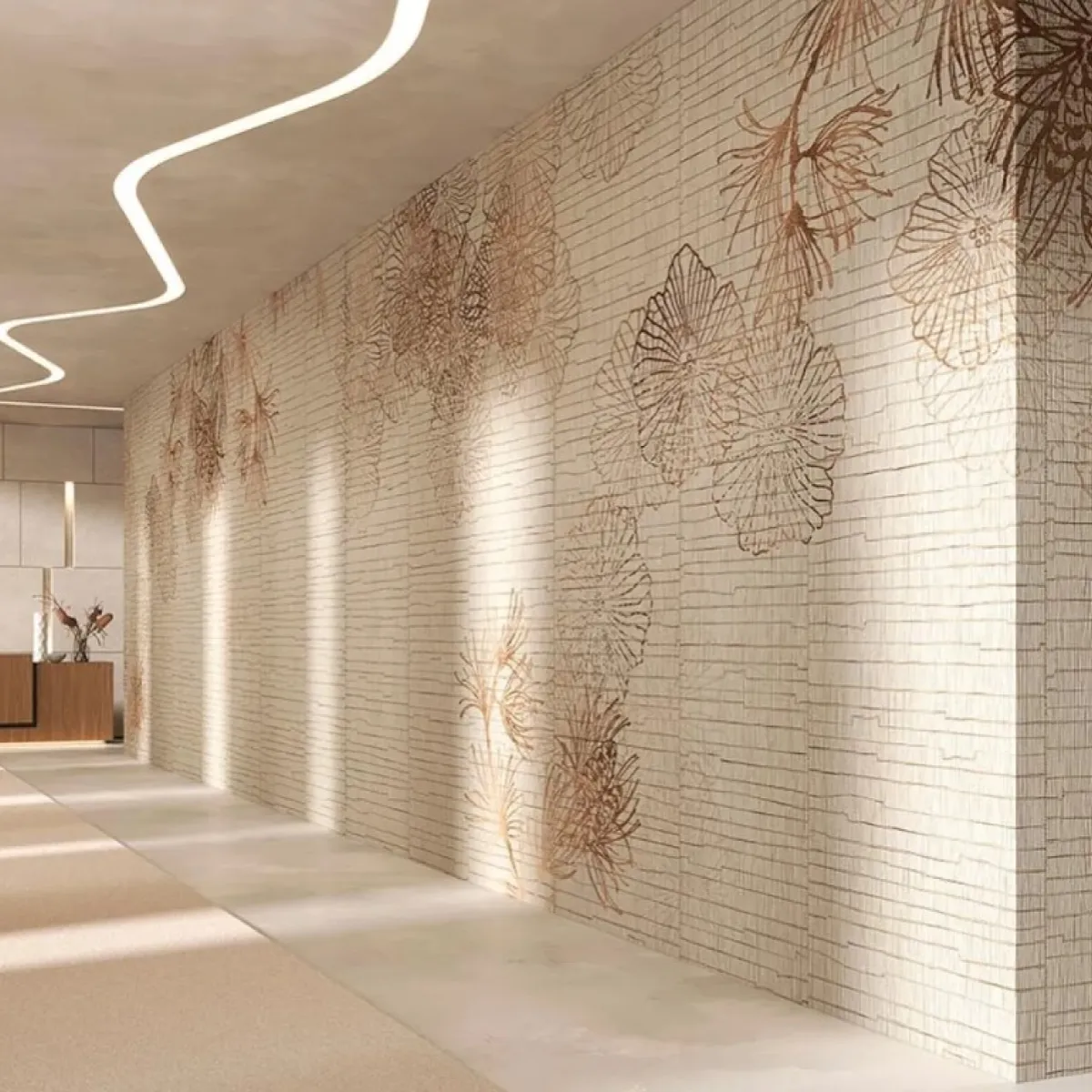
The 2026 interior design trend sees a significant evolution in plant-inspired wallpaper motifs. No longer simple floral prints, but true botanical works of art that combine scientific precision with artistic vision. This trend draws on the heritage of historical botanical illustrations, reinterpreting them through contemporary printing technologies and the aesthetic sensibility of contemporary design.
Ultra-detailed botanical patterns are characterised by the faithful reproduction of exotic and native plant species, with particular attention to monumental-sized leaves, complex inflorescences and compositions that create an effect of total immersion in nature. Collaborations with artists and illustrators have led to the creation of exclusive collections that transform walls into veritable contemporary herbaria.
Among the most represented species are palms, monstera, tree ferns, wild orchids and rare tropical plants, often accompanied by fauna elements such as butterflies, exotic birds and insects with sophisticated liveries. The colour palette favours naturalistic but intense tones, with a particular predilection for deep greens, midnight blues, burgundies and ochres, often on dark backgrounds that enhance the luminosity of the subjects.
3. Reinterpreted 1970s geometrics: the return of geometric wallpaper
Wallcovering 2026 celebrates the grand return of bold geometrics inspired by the 1970s, reinterpreted with a contemporary sensibility that makes them perfectly integrated into modern interiors. Geometric wallpaper becomes the absolute protagonist, with patterns ranging from overlapping circular forms to sinuous lines, from optical compositions to textures inspired by brutalist architecture.
This trend is distinguished by the bold use of colour and the monumental scale of patterns. The colour palettes draw directly from seventies aesthetics with orange, chocolate brown, mustard, olive green and terracotta, often combined in strong contrasts that create immediate visual impact. Contemporary geometric wallpaper, however, also knows how to be sophisticated, with variants in neutral and metallic tones that make it suitable even for the most minimal interiors.
Geometrically inspired wallpaper motifs lend themselves to multiple stylistic interpretations: from regular and repetitive compositions that create visual rhythm, to irregular and asymmetrical patterns that introduce dynamism into spaces. Particularly appreciated are designs that play with perspective and three-dimensional effects, creating optical illusions that amplify the perception of space.
4. Earthy and neutral palettes: the elegance of chromatic sobriety
Contemporary wall design in 2026 embraces earth tones with conviction, creating enveloping environments that convey warmth, security and connection with nature. This trend represents an evolution of Scandinavian minimalism, enriched by a more complex and layered chromatic sensibility that draws on the colours of natural landscapes: from sandy dunes to clay soils, from sedimentary rocks to ancient wood trunks.
Earthy palettes favour warm beiges, sand, camel, terracotta, ochre, coffee brown and dove grey, often combined in tone-on-tone shades that create depth without sharp contrasts. This modern wallpaper is characterised by delicate textures, essential geometric patterns or barely hinted organic motifs that emerge from the background through subtle variations in brightness and saturation.
The neutral chromatic approach doesn't mean renouncing personality: textured finishes, plays of opacity and graphic overlays allow the creation of walls of great refinement that dialogue harmoniously with contemporary furnishings. The trend lends itself particularly well to creating elegant backdrops in environments where furniture and accessories become the true protagonists, or for defining relaxing atmospheres in bedrooms and domestic wellness areas.
5. Elegant maximalism: Art Deco and bold decorative patterns
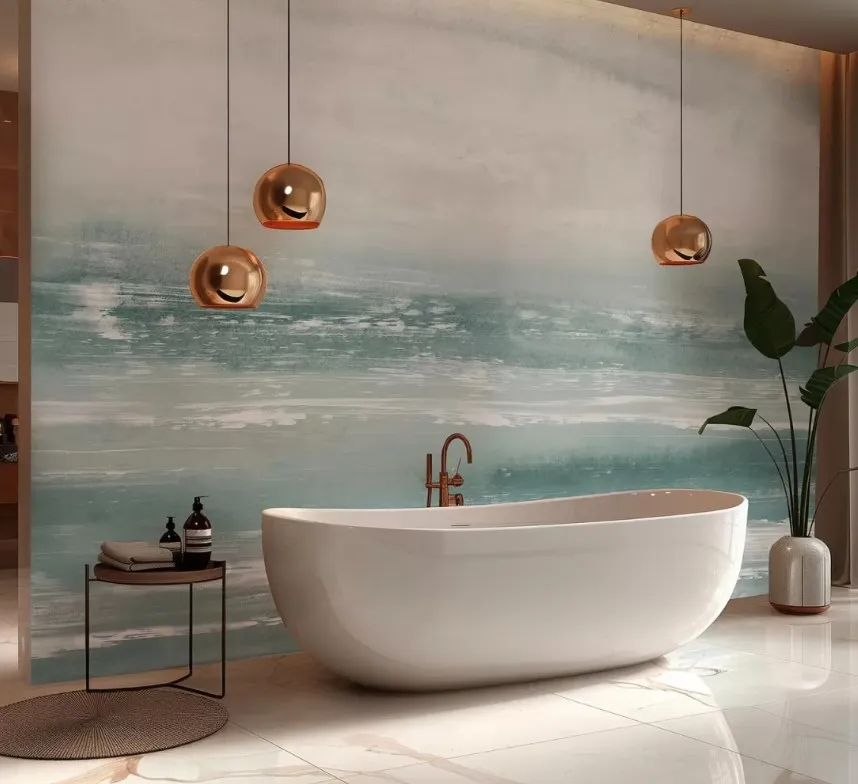
In contrast to the minimalism that has dominated recent years, 2026 marks the definitive return of maximalism, reinterpreted however with a contemporary sensibility that makes it refined and elegant. This wallpaper trend for 2026 draws on the Art Déco aesthetic of the 1920s and '30s, blending it with influences from contemporary art, digital graphic design and global decorative cultures.
Maximalist wallpaper motifs are characterised by compositional richness, generous use of colour and pattern, the presence of metallic elements (gold, copper, bronze) and the layering of different visual levels. The most appreciated compositions combine bold geometric elements with stylised naturalistic patterns, creating surfaces of great visual impact that transform walls into veritable works of art.
Colour palettes range from intense jewel tones (midnight blue, emerald green, burgundy, plum) to dramatic contrasts between black and gold, from soft combinations of antique pink and pearl grey to vibrant mixes of orange, turquoise and yellow. The texture of wallpaper in this category often features glossy, satin or metallic-insert finishes that capture and reflect light, creating dynamic effects that change throughout the day.
How to integrate maximalism without overloading spaces:
- Feature wall rule: limit decorative wallpaper to a single focal wall, keeping other surfaces neutral to balance the composition
- Space proportion: maximalism works best in large rooms or those with high ceilings where patterns can express themselves without overwhelming the space
- Furnishing complementarity: in the presence of maximalist wallcovering, favour furniture with clean lines and solid colours that don't compete visually with the walls
Digital personalisation: bespoke wallpaper becomes accessible
The final major trend that is redefining the wallcovering market in 2026 is the democratisation of personalisation through digital printing technologies. What until a few years ago was a luxury reserved for high-level contract projects is now becoming accessible to the residential market as well, thanks to the evolution of production technologies.
Digital printing on wallpaper allows completely personalised projects to be realised starting from photographs, illustrations, digital graphics or hybrid compositions. Designers and interior decorators can thus create unique solutions that respond perfectly to the aesthetic and functional requirements of each project, from reproductions of works of art to panoramic photographic portraits, from personalised geometric patterns to typographic compositions.
The latest generation printing technologies guarantee exceptional chromatic rendition, with colour gamuts that exceed those of traditional offset printing. The available substrates range from traditional vinyl paper to ecological and water-repellent finishes, allowing the most suitable material to be chosen for the characteristics of the environment and maintenance requirements.
Sustainability and innovation: the future of modern wallpaper
Cutting across all the trends described is the growing attention to environmental sustainability. The 2026 interior design trend sees wallpaper manufacturers committed to developing increasingly eco-compatible solutions, responding to the growing demand from consumers attentive to the environmental impact of their furnishing choices.
Among the principal innovations are the use of ecological raw materials and the employment of water-based inks free from chemical solvents.
Sustainability concerns not only materials but also production processes: optimisation of energy consumption, reduction of waste through just-in-time production systems and digitalisation of processes to minimise physical sampling and prototypes. These elements are becoming increasingly central to brand communication and to the purchasing choices of professional and private consumers.
Designing an interior with wallpaper in 2026
The five trends analysed demonstrate how wallpaper has regained a central role in contemporary interior design, definitively overcoming the stigma of being an outdated element to establish itself as a versatile, sustainable design tool capable of radically transforming the identity of a space.
The key to effective use of these trends lies in the ability to integrate them coherently into the overall project, considering not only the aesthetic impact but also practical aspects such as durability, maintenance, relationship with natural and artificial lighting. Modern wallpaper offers solutions for every design requirement, from the statement wall that becomes the absolute protagonist of the composition to discreet backdrops that enhance furnishings and works of art.
For those wishing to explore in depth the possibilities offered by trending wallpapers and discover the most innovative collections in the Italian landscape, it is recommended to explore the projects realised by interior design professionals, which concretely demonstrate how these trends translate into real, functional and aesthetically satisfying spaces. 2026 thus confirms itself as the year in which wallpaper redefines the boundaries of contemporary wall design, opening up previously unthinkable expressive possibilities.