24 AUG
The bathroom is no longer just a functional space: it has become an environment dedicated to well-being, where surfaces and imagery contribute to the overall atmosphere. Thanks to specific systems designed for wet environments, bathroom wallpaper can also be used in areas exposed to water, while traditional decorative finishes are suitable for less demanding areas. This guide explains the differences between materials, applications, and maintenance, offering ideas for contemporary bathrooms, suites, and wellness spaces.
Wallpaper in the bathroom: combining aesthetics and performance
Using wallpaper in the bathroom brings a level of graphic freedom to the project that is difficult to achieve with modular coverings. Landscapes, textures, designer patterns, and panoramic compositions transform the wall into a continuous surface and make it possible to create intimate, natural, or dramatic atmospheres.
Bathrooms, however, present specific conditions: high humidity, condensation, contact with water, and frequent cleaning. This makes it essential to distinguish between decorative wallpaper intended for dry areas and a waterproof system designed for showers and wet surfaces. The final result depends on the entire system, including the substrate, surface preparation, adhesive, protective coating, sealing, and professional installation.
Bathroom areas and the most suitable wall covering
Walls away from water
Behind the sink, when adequately protected, around sanitary fixtures, near the entrance, or on open walls, it is possible to use washable and moisture-resistant finishes, always taking ventilation and the actual conditions of the room into consideration.
Bathtub wall
This area may be exposed to frequent splashes. If the wall covering comes into direct contact with water, a complete waterproof system must be used and installed according to the required specifications.
Inside the shower
A simply washable wallpaper is not sufficient in this area. A specific fiberglass system designed for wet environments, such as H2O, is required and must be installed using the complete application system and proper sealing.
Ceilings and special surfaces
In well-ventilated bathrooms, the design can extend onto the ceiling or cover niches and curved walls. Technical feasibility must be assessed according to the substrate, the presence of condensation, and the selected system.
H2O: waterproof fiberglass wallpaper
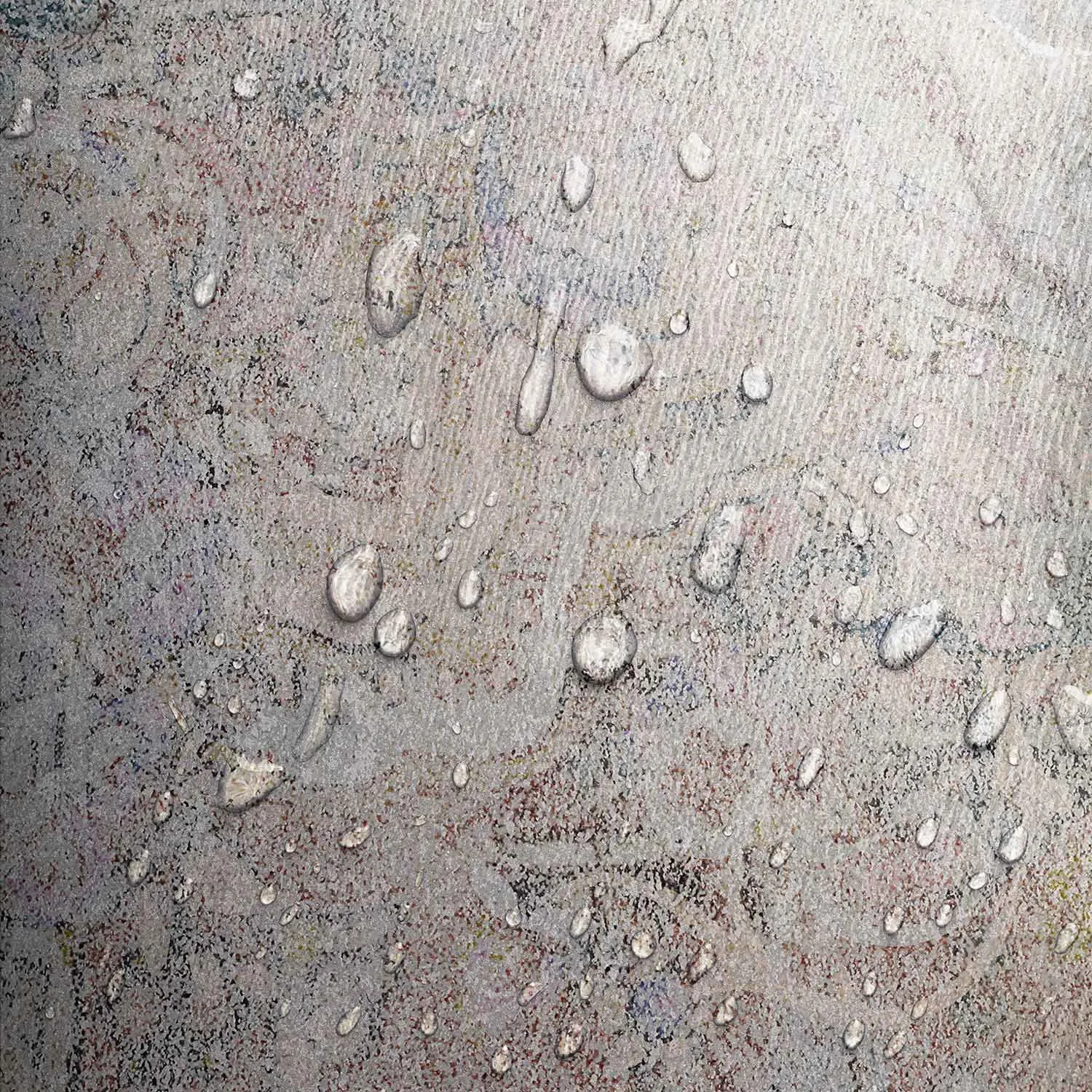
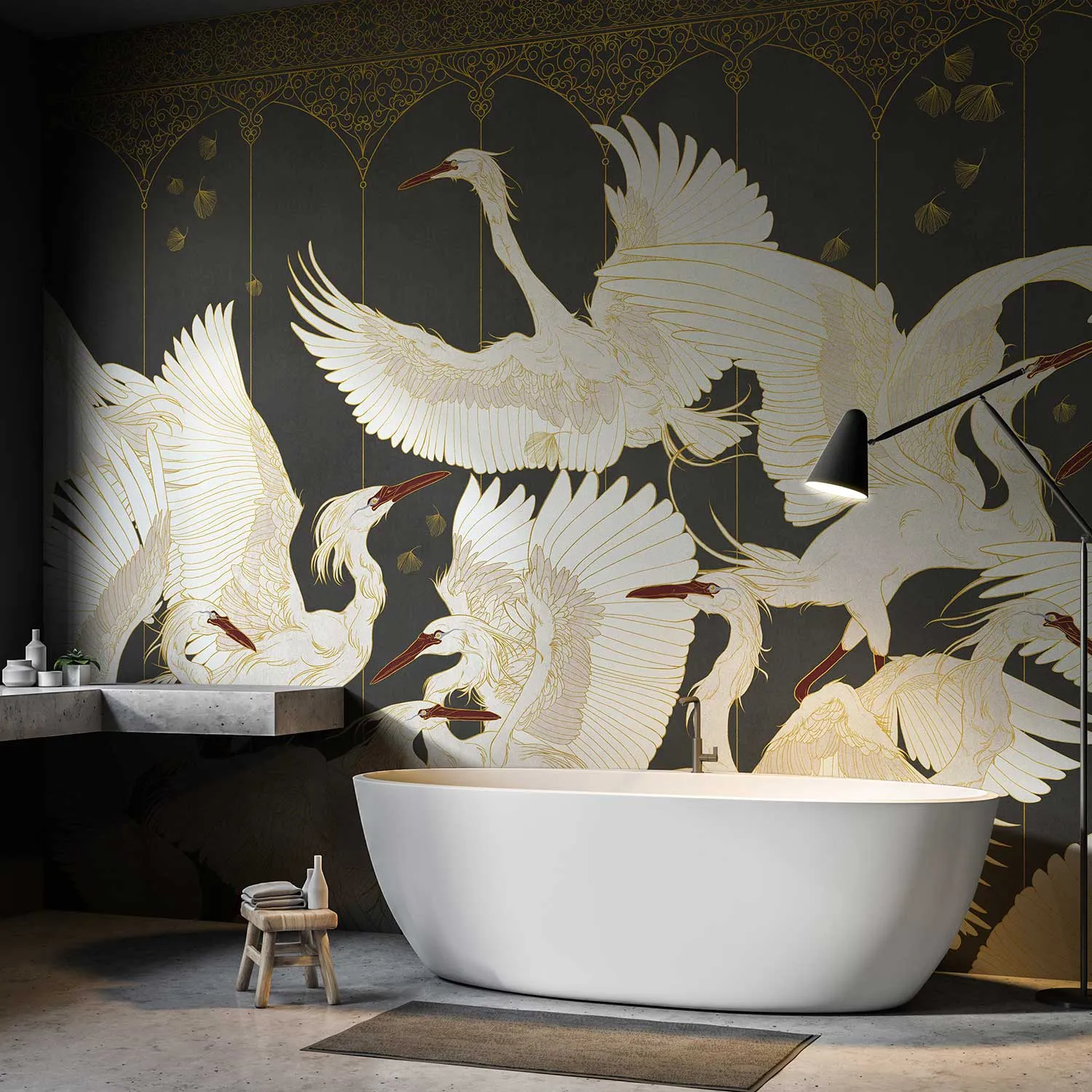
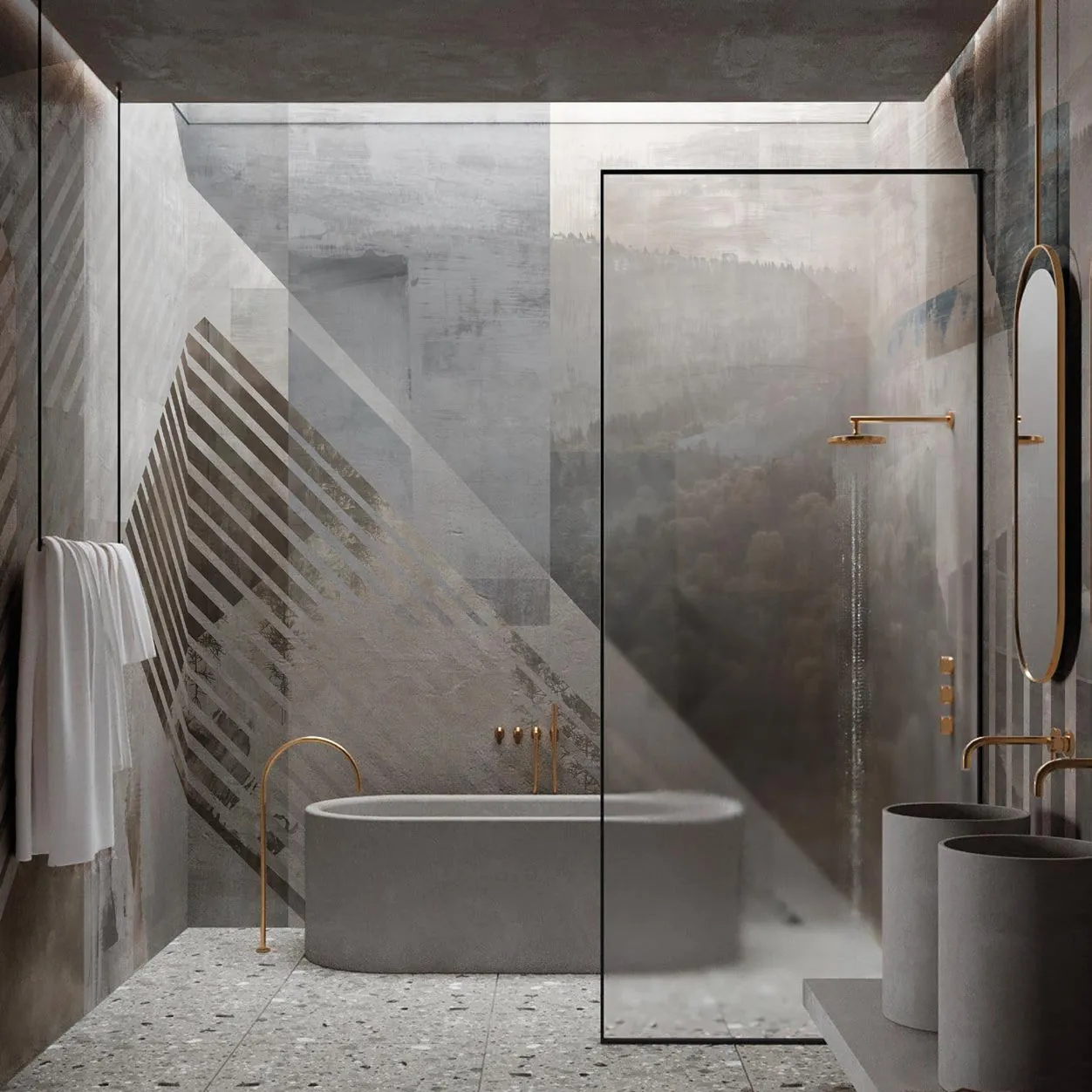
Tecnografica’s H2O finish is a waterproof fiberglass wallpaper designed for bathrooms and high-humidity environments. When installed as a complete system using the specified components, it can also be used in areas in direct contact with water, such as inside the shower enclosure or on the wall next to the bathtub.
The texture of the substrate preserves sharp graphic definition and makes it possible to bring decorative designs into areas where tiles or slabs have traditionally been used. The continuity of the image reduces the modular effect and allows for the creation of immersive surfaces. As with any technical wall covering, substrate preparation, waterproofing, joints, and installation are essential to the final performance.
Waterproof, water-repellent, or washable wallpaper for the bathroom?
A washable wallpaper can withstand gentle cleaning; a water-repellent surface limits moisture penetration; a waterproof system is designed to prevent water from passing through under the specified conditions. Confusing these terms can lead to unsuitable choices.
In a bathroom, the classification must always be considered in relation to the installation area. A dry wall has different requirements from the inside of a shower. When contact with water is direct and frequent, the suitability of the entire application system must be verified and installation should be entrusted to experienced professionals.
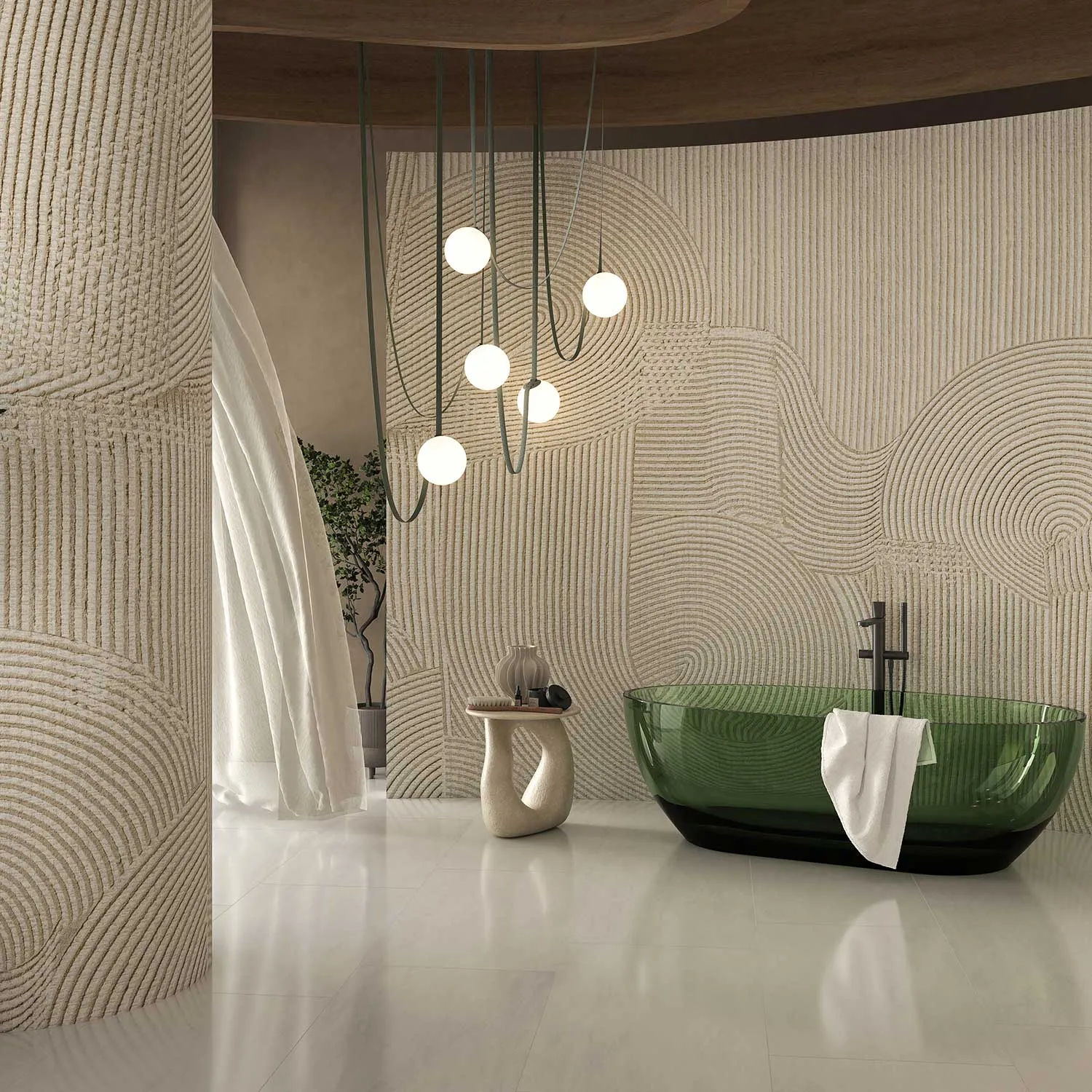
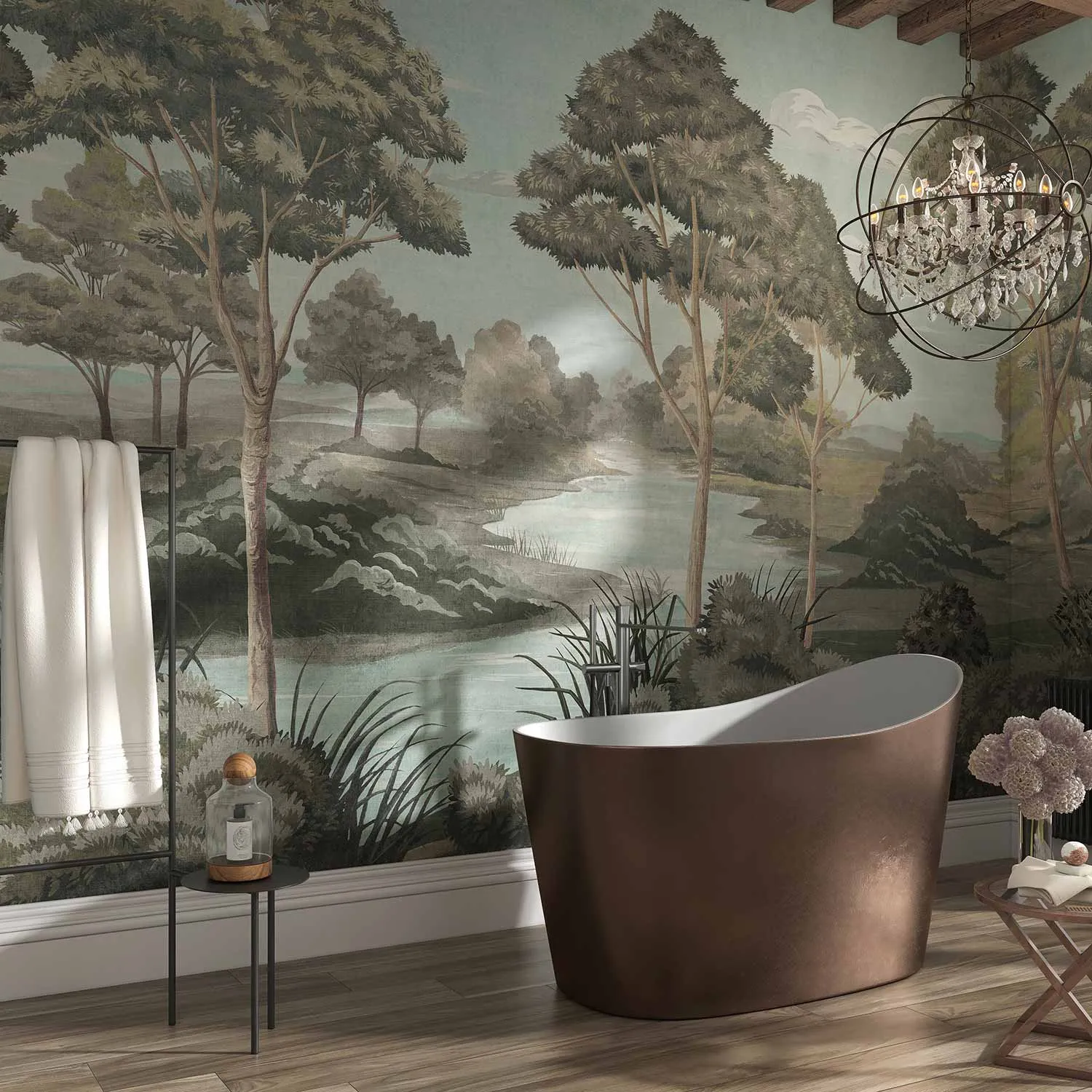
Style ideas for a modern bathroom
Marble-, stone-, and onyx-effect wallpaper
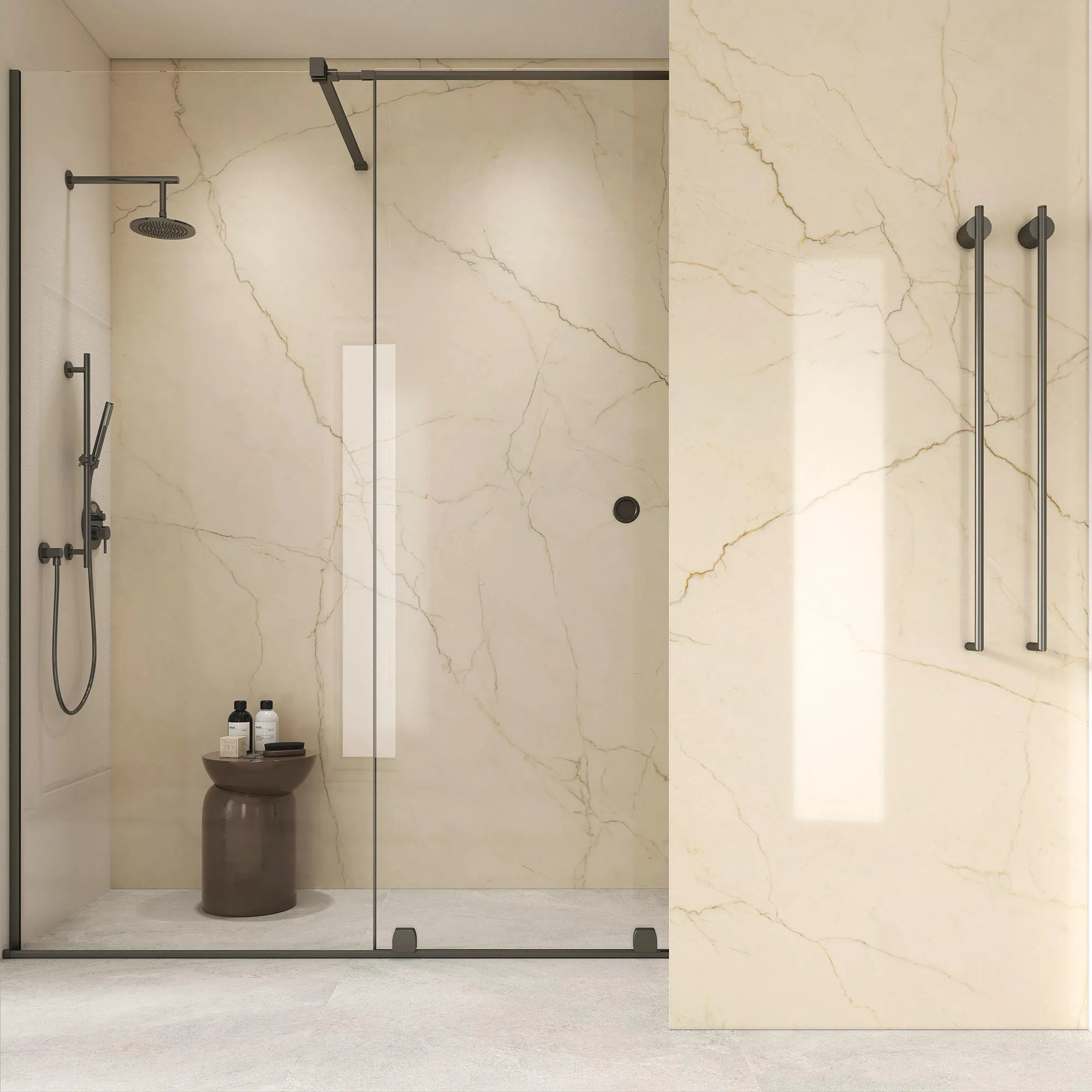
Mineral-inspired designs create elegant, visually continuous bathrooms: a marble-effect wallpaper with veining that can be adapted to the proportions of the wall defines sophisticated interiors. Luminous or backlit versions add depth to wellness areas and suites.
Botanical and tropical designs
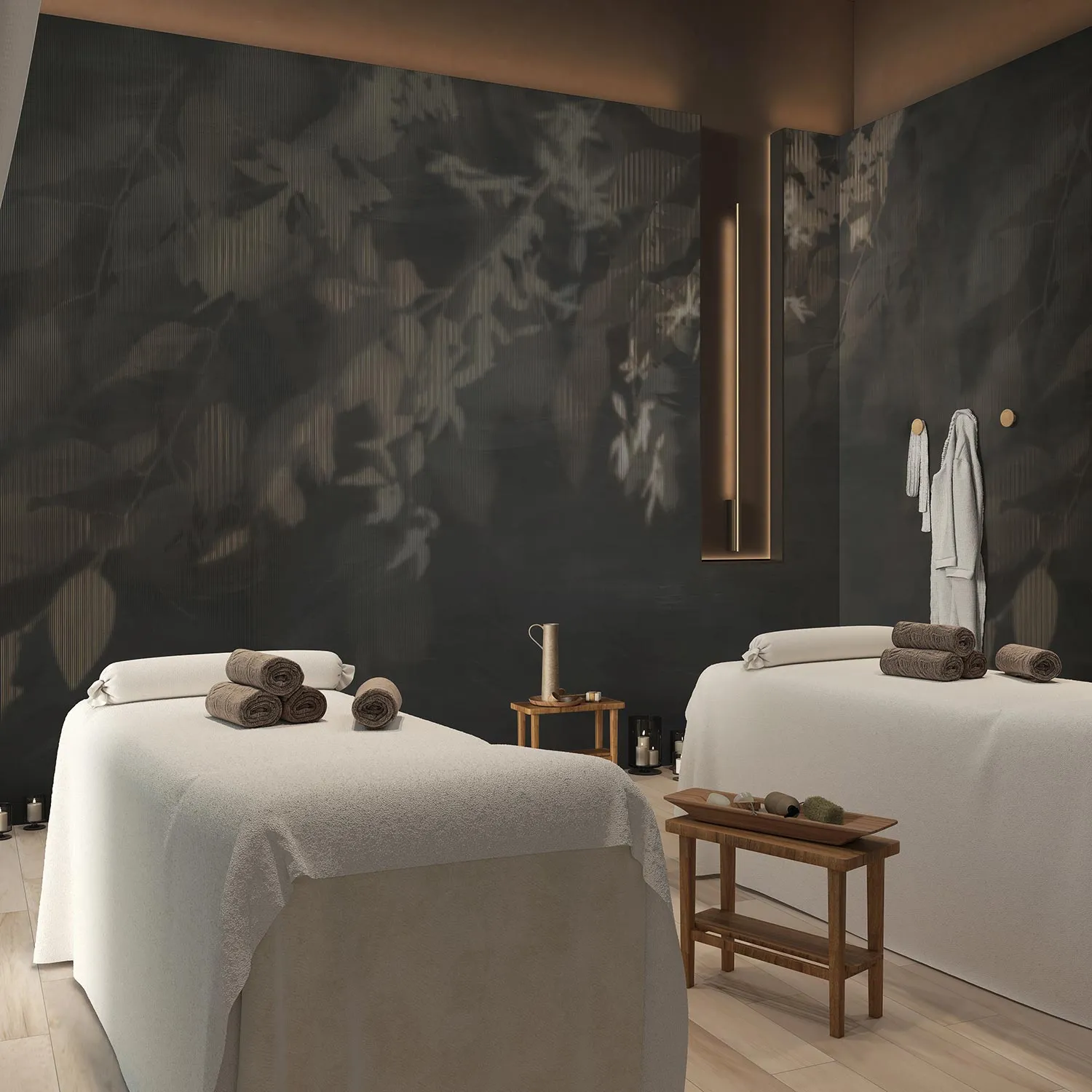
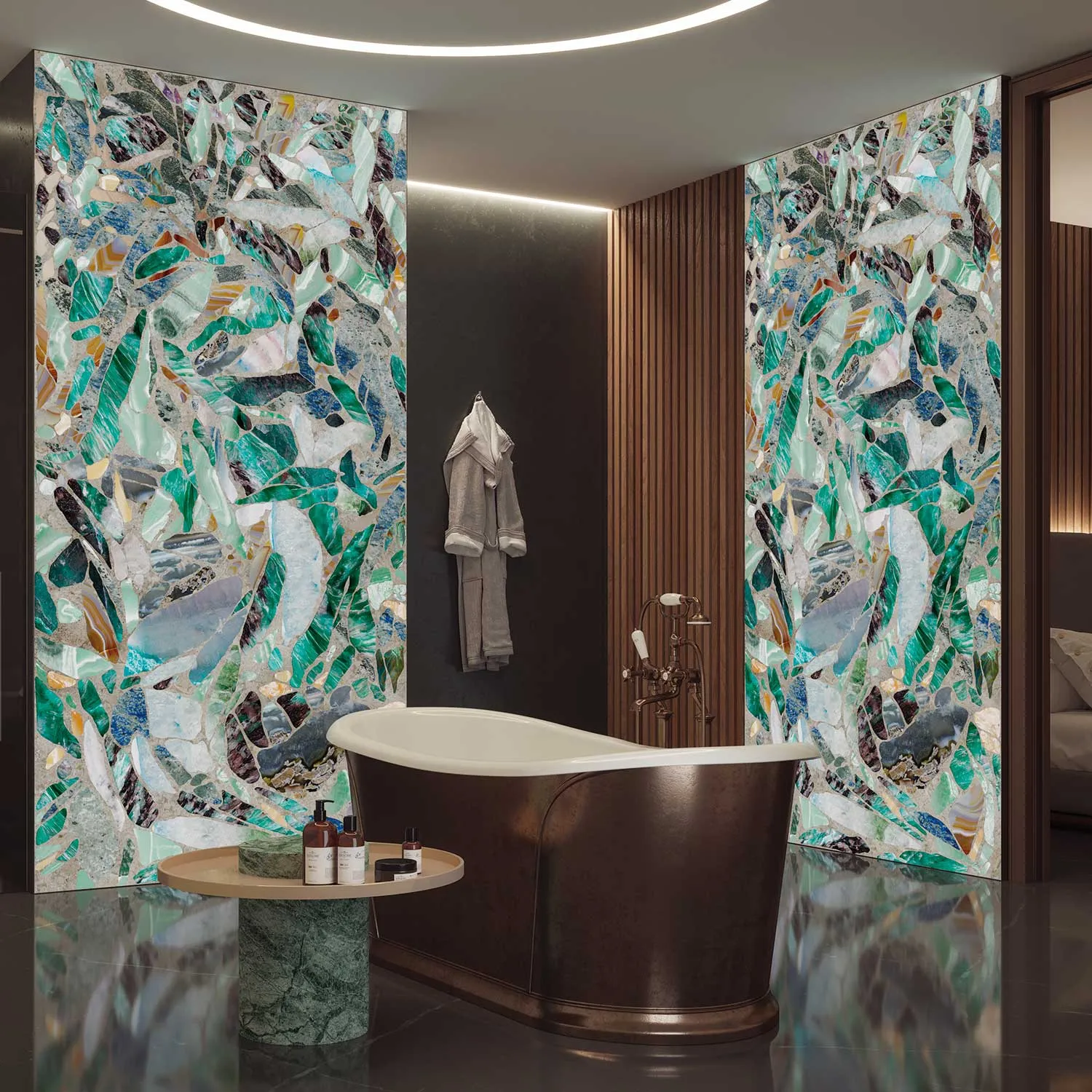
Leaves, vegetation, and natural landscapes transform the bathroom into an immersive space. Greens, blues, and earthy tones pair beautifully with wood, stone, and metal fixtures.
Abstract and watercolor designs
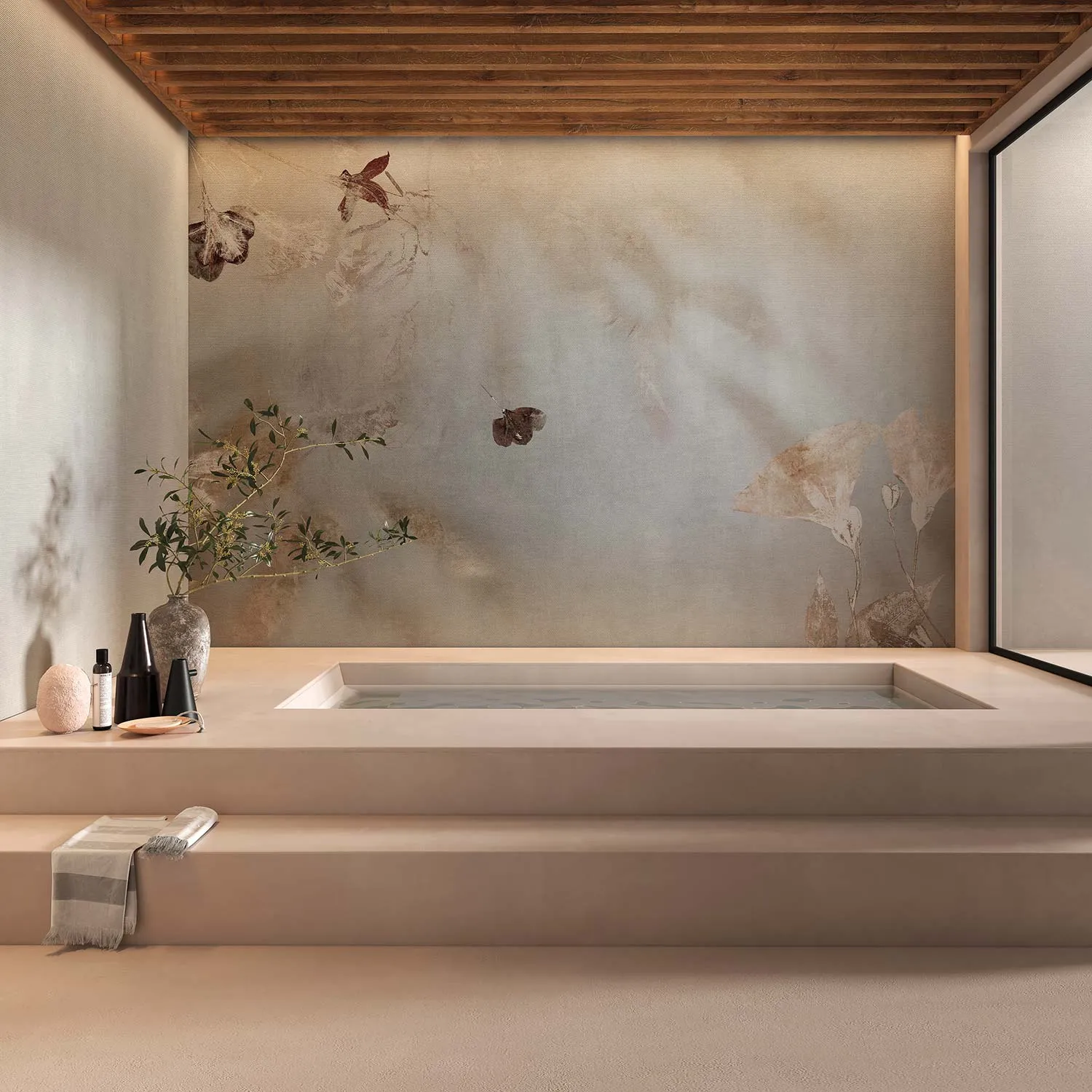
Fluid gradients, translucent layers, and brushstrokes evoke the movement of water and are ideal for contemporary, relaxing interiors.
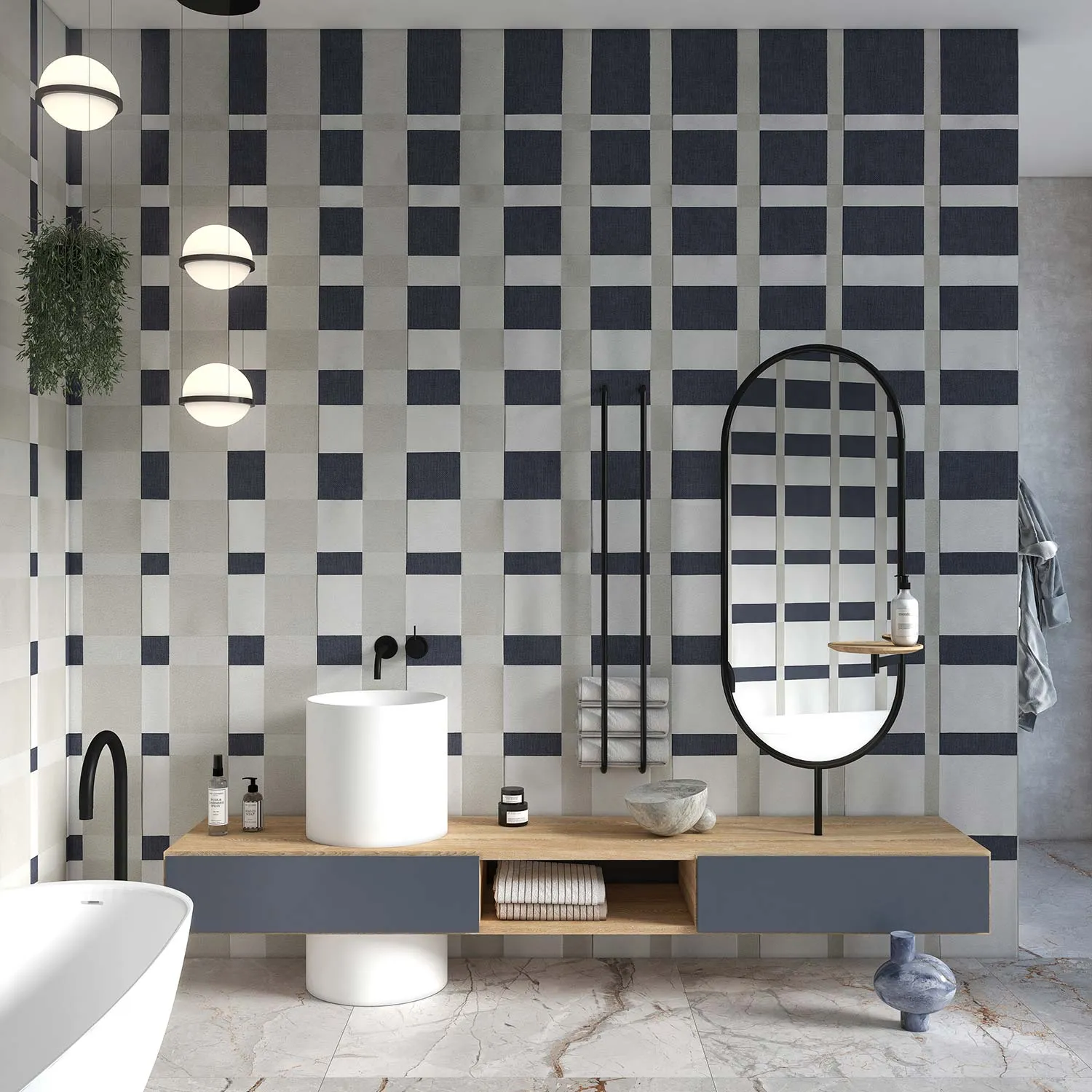
Geometric and graphic patterns
Regular patterns or optical compositions introduce rhythm into minimalist bathrooms. In small spaces, it is important to control contrast and scale to avoid an overly dense visual effect.
Landscapes and designer graphics
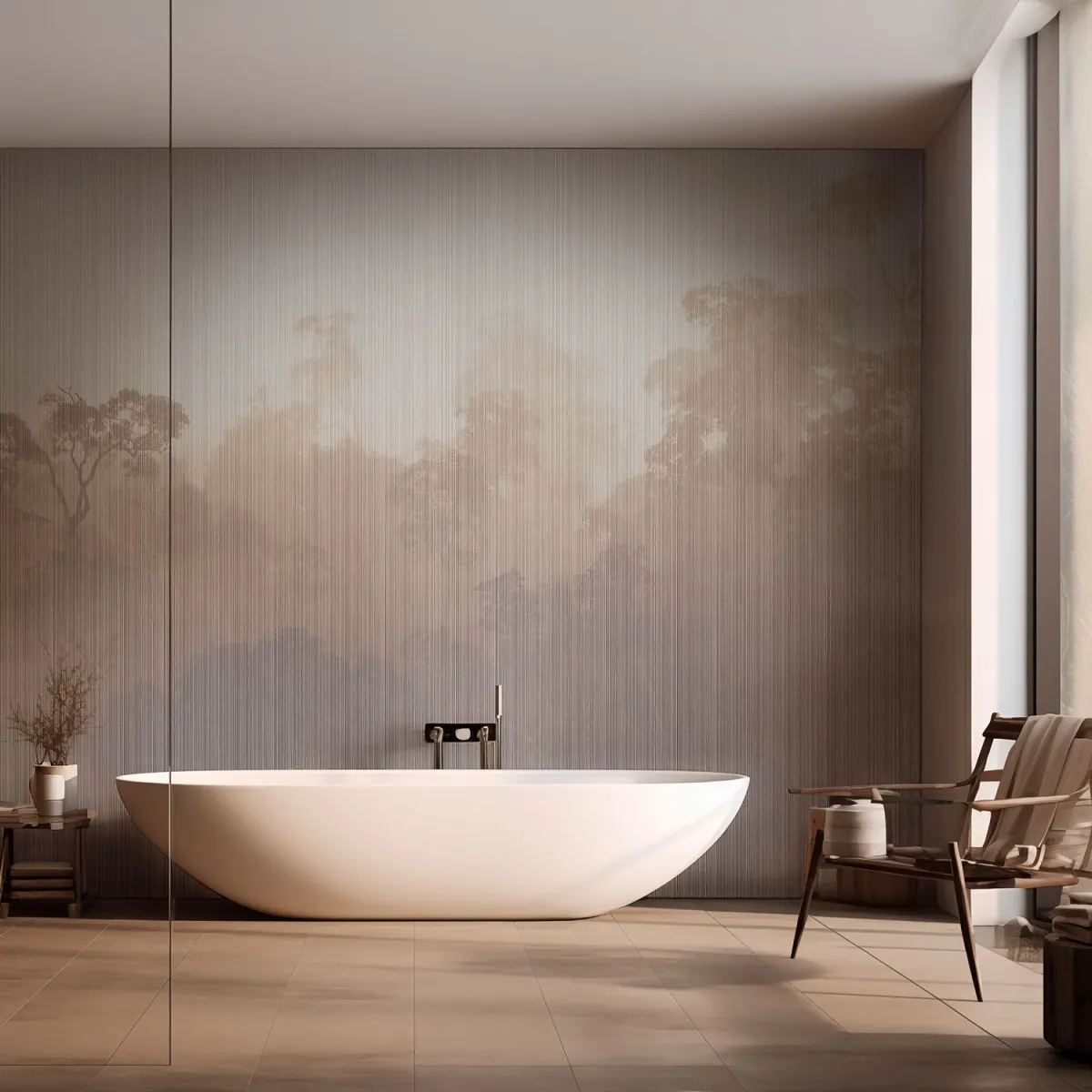
A panoramic wall can transform a primary bathroom or private spa into an experiential space. The design can be adapted around niches, sanitary fixtures, and openings to preserve the legibility of the composition.
Bathroom wall coverings as an alternative to tiles
As a bathroom wall covering alternative to tiles, wallpaper makes it possible to move beyond the regular grid created by grout lines and achieve a visually continuous surface. This effect is particularly successful in small bathrooms, where a panoramic design can make the space feel larger, and in larger bathrooms, where the wall covering can define wellness zones or dramatic feature walls.
This does not mean replacing every material indiscriminately. Tiles, wallpaper, and panels can coexist, assigning the most suitable solution to each surface. An H2O shower wall can be coordinated with a ceramic floor and painted walls; a decorative panel can cover a vanity unit or niche while maintaining the same graphic design.
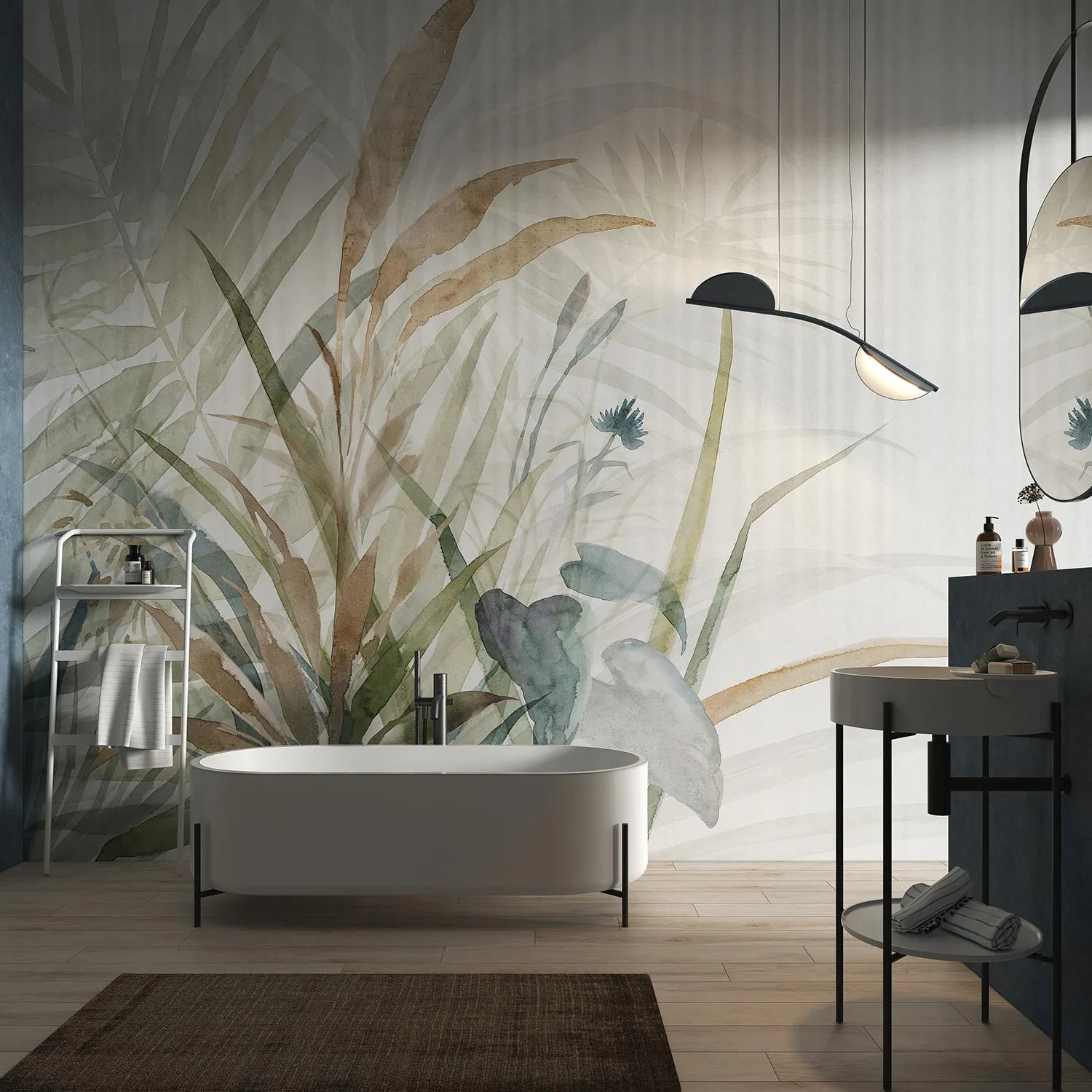
Decorative panels for bathrooms and wellness areas
Decorative panels for bathrooms and wellness areas
Decorative panels for bathrooms expand the range of design possibilities: aluminum slabs and glass panels can be used for walls, showers, furniture, partitions, and surfaces that require greater rigidity. Glossy finishes enhance marble- and onyx-inspired designs, while matte finishes create a more natural and contemporary effect.
In wellness projects, backlit decorative panels transform the wall into a source of diffused light. Light passes through or enhances the graphic design, creating depth and an enveloping atmosphere. The material, frame, electrical system, and protection rating must all be designed according to the specific wet-area application.
Small bathrooms: using graphics to make the space feel larger
In a compact bathroom, a design featuring depth, gradients, or vertical elements can change the perception of the room’s proportions. Light colors increase brightness, while a well-lit dark design can create an intimate and sophisticated atmosphere. There is no need to limit the design to small-scale patterns: a large-scale graphic with just a few broad elements can often make the wall appear cleaner and more balanced.
Covering a single surface, such as the sink wall or shower wall, creates a focal point without overwhelming the room. Maintaining color continuity with the flooring, vanity, and accessories helps keep the overall design balanced.
Coordinating sanitary fixtures, faucets, and furniture
Nature-inspired graphics pair easily with wood, stone, and brushed metals. Marble-inspired textures work beautifully with black, chrome, bronze, or brass faucets depending on the color palette. In minimalist bathrooms, an artistic wallpaper can become the only decorative element, while sanitary fixtures and furniture remain understated.
It is useful to avoid competition between too many different veining patterns. If the flooring or countertop already has a strong visual character, the wall can feature a softer graphic. When the furniture is monochromatic, on the other hand, the wall covering can take on a more expressive role.
Professional installation and substrate preparation
Installation in wet areas cannot be improvised. The substrate must be solid, level, dry, and free from infiltration problems. Inside the shower enclosure, waterproofing must be properly prepared, and primers, adhesives, protective coatings, and sealants compatible with the system must be used.
Corners, connections with the shower tray or bathtub, niches, and plumbing penetrations are the most delicate areas. The installer must follow the technical instructions and respect the required drying times. Careful installation is an integral part of the product’s performance.
Cleaning, ventilation, and maintenance
Cleaning should follow the instructions provided for the specific finish. In general, soft cloths and neutral detergents should be used, while abrasive products, stiff brushes, and solvents should be avoided. Limescale and cosmetic residue should be removed regularly to preserve the surface.
Proper ventilation reduces condensation and persistent humidity, contributing to both comfort and the durability of all the materials used in the bathroom. Even with waterproof wall coverings, adequate air circulation remains a fundamental part of the project.
From residential bathrooms to hospitality
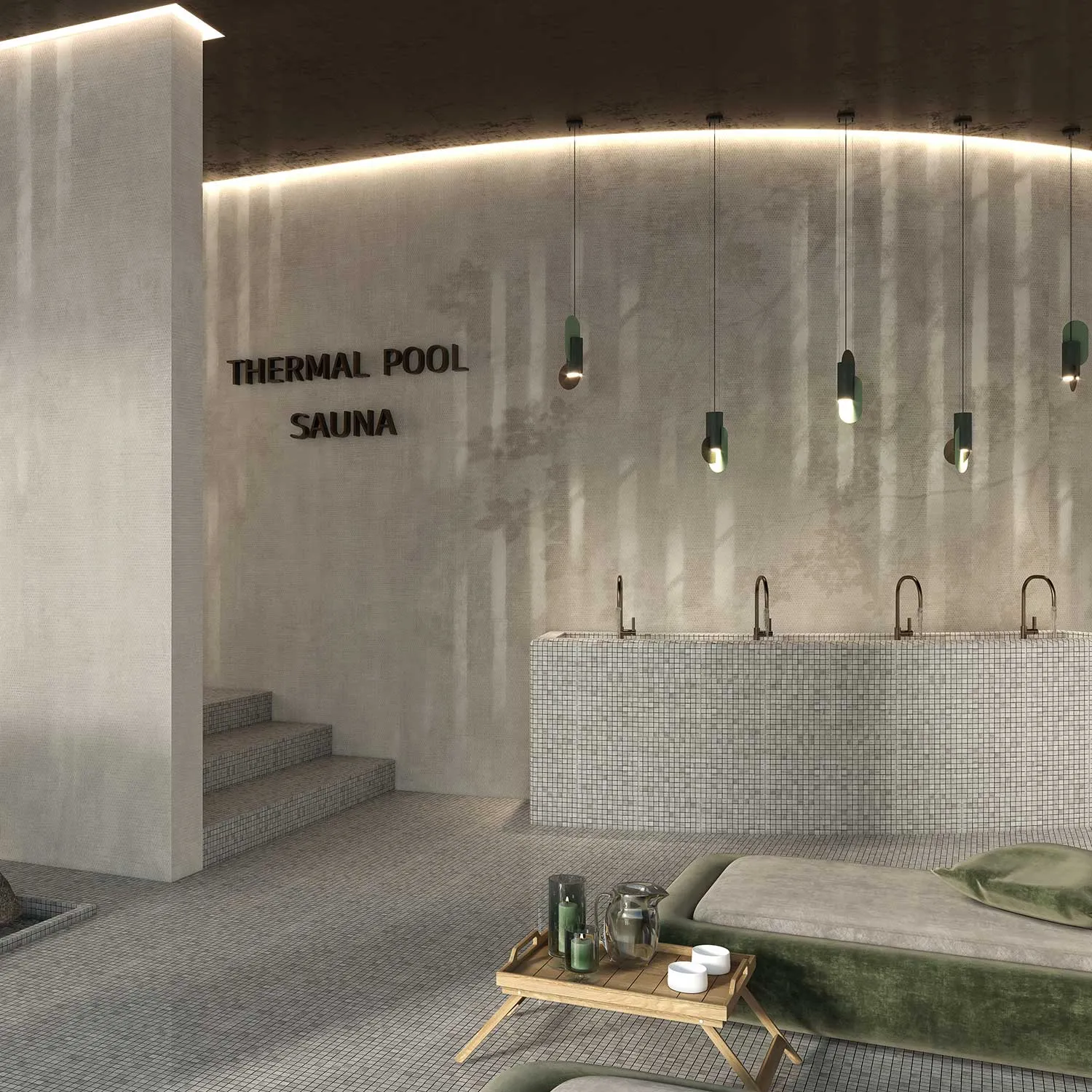
Bathroom wallpaper is also suitable for hotels, resorts, and spas, where visual continuity between the guest room and wellness area reinforces the identity of the project. The same graphic can be applied to different finishes: a softer surface in the bedroom, H2O in the shower, and decorative panels in areas subject to greater wear.
This makes it possible to create coordinated interiors without compromising the technical requirements of each area. Every bathroom becomes part of the property’s visual narrative rather than a separate, purely functional space.
Frequently asked questions
Can wallpaper be installed inside a shower?
Yes, by using a specific fiberglass system designed for wet environments, such as H2O, installed with the complete application system required. A wallpaper that is simply washable or water-repellent is not sufficient for direct and continuous contact with water.
What is the difference between washable and waterproof wallpaper?
Washable wallpaper allows for gentle cleaning; a waterproof system is designed to resist water penetration under the specified installation conditions. In a bathroom, the choice depends on the distance from the shower, bathtub, and sink.
Does wallpaper always replace tiles in the bathroom?
Not necessarily. It can replace tiles in certain areas or be combined with them in a mixed-material design. The most suitable solution depends on the substrate, exposure to water, maintenance requirements, and the desired aesthetic result.
Which designs can make a bathroom look larger?
Designs featuring perspective, gradients, bright colors, and a limited number of large-scale elements can increase the perception of depth. Vertical patterns and compositions that continue without interruption can also help make the space feel taller.
How should H2O wallpaper be cleaned?
The surface should be cleaned according to the system’s instructions, generally using a soft cloth and neutral detergent. It is important to avoid abrasive products or tools that could damage the protective coating and seals.
Transform your bathroom into a design-focused space
Transform your decorative bathroom wall with Tecnografica designs available for H2O and decorative panels. The technical and graphic design team can support you in selecting the system, adapting the composition, and defining the most suitable solution for the different areas of the bathroom.