


20 MAY
The wellness sector represents one of the most dynamic and rapidly growing segments in today's hospitality and lifestyle landscape. Spas, wellness centers, hotels with wellness areas, and beauty centers require a highly specialized design approach in which every element, from materials and colors to textures and lighting, must come together to create environments that promote deep relaxation, regeneration, and mental and physical well-being.
This in-depth article explores wellness design through the strategic use of spa wallpapers and spa decorative panels, examining how these elements can transform functional spaces into wellness sanctuaries. From zen-inspired graphics that evoke natural elements such as bamboo, stones, and water, to scientifically studied therapeutic color palettes; from backlit panels that create immersive atmospheres to textures that recall elements of nature: we'll discover technical and creative solutions for treatment rooms, massage rooms, relaxation areas, wet zones, and reception spaces.
Special attention will be given to the essential technical features required for high-humidity environments such as saunas, steam rooms, and wet areas, where the choice of water-repellent, durable materials that comply with hygiene and sanitary regulations becomes critical to ensuring longevity, safety, and ease of maintenance.
Design for spas and wellness centers: fundamental principles
Interior design for spas follows specific principles that set it apart from any other design field. The primary goal is not purely aesthetic but therapeutic: to create environments that activate physiological and psychological mechanisms of relaxation, lowering cortisol levels and promoting states of calm and regeneration.
Environmental Psychology Applied to Wellness
Scientific research in environmental psychology has shown how specific visual stimuli directly influence the autonomic nervous system. Cool colors such as blues and greens reduce heart rate and blood pressure, while natural patterns activate parasympathetic relaxation responses. Decorations for wellness centers must therefore be designed with an awareness of these mechanisms.
Textures that evoke natural elements—the grain of wood, the irregular surface of stone, the movement of water—create instinctive connections with nature (biophilic design), generating feelings of safety and primal well-being. This explains why spa wallpaper featuring nature-inspired motifs is particularly effective in wellness environments.
The Five Elements of Perfect Wellness Design
- Visual continuity: avoiding abrupt interruptions and creating harmonious visual flows that guide the client through the various areas.
- Controlled simplicity: uncluttered environments where every element has a precise purpose and contributes to the overall atmosphere without being distracting.
- Authentic naturalness: favoring materials and representations that genuinely evoke nature rather than artificial or overly stylized interpretations.
- Adjustable lighting: the ability to adapt lighting to different activities and times of day, integrating wall coverings that interact with the light.
- Visual silence: color palettes and patterns that don't cause perceptual fatigue, allowing the mind to "rest" through the eyes as well.
The latest generation of spa decorative panels make it possible to honor all of these principles while delivering superior technical performance in terms of moisture resistance, ease of maintenance, and long-term durability.
Therapeutic Color Palettes for Wellness
The choice of colors in wellness environments cannot be left to chance or to subjective aesthetic preferences. There is well-established scientific evidence on the psychophysiological effects of different color tones.
Chromotherapy Applied to Wellness Spaces
- Sage green and natural tones: represent the most versatile choice for spa and wellness center design. Green is the color of balance, associated with nature and regeneration. Tones such as sage, olive green, and aqua green reduce visual fatigue and promote feelings of freshness and renewal. Perfect for massage rooms, relaxation areas, and facial treatment rooms.
- Teal blue and deep blues: evoke the elements of water and sky, creating feelings of vastness, freedom, and purification. Blues lower blood pressure and slow breathing, making them ideal for meditation areas, hydromassage tubs, and Kneipp circuits. Decorations for wellness centers that use shades of blue create deeply relaxing environments.
- Beige, sand, and earthy tones: convey warmth, comfort, and stability. These natural neutrals are perfect as base tones that don't tire the eye and pair harmoniously with colorful accents. Essential for reception areas, locker rooms, and corridors connecting the various spaces.
- Warm whites and ivory: purity, cleanliness, and brightness. Essential for beauty treatment rooms where visual precision matters, but also for amplifying natural light in potentially dim spaces. Spa wallpaper in white tones can feature delicate textures that add depth without feeling heavy.
Strategic Color Accents
Beyond the dominant tones, carefully controlled accents of more vibrant colors can be used strategically: touches of coral to gently boost energy in fitness areas, lavender accents to promote sleep in relaxation zones, and gold details to convey luxury and exclusivity in premium hotel spas.
The key is to maintain a clear color hierarchy: 60% primary relaxing tone, 30% complementary secondary tone, 10% strategic accents. This proportion creates visual balance and prevents perceptual overstimulation.
Spa Wallpapers: Graphics and Patterns for Well-Being
Designer wallpapers are an exceptionally versatile tool for creating distinctive wellness atmospheres. The choice of pattern profoundly influences how the space is perceived and the emotional state of guests.
Nature-Inspired Patterns and Biophilic Design
- Botanical elements: bamboo leaves, ferns, tropical plants, moss. Representations of vegetation trigger neurobiological relaxation responses tied to humans' evolution in natural environments. Particularly effective in waiting rooms and relaxation areas where clients spend time seated.
- Stone and mineral textures: depictions of marble, smooth river stones, geodes, and crystals. They evoke solidity, timelessness, and a connection with the earth. Ideal for wellness journeys that include hot stone therapies or environments inspired by natural thermal baths.
- Water elements: stylized waves, reflections on water, calm water surfaces. Water is the archetypal element of purification and renewal. Patterns that evoke this element are perfect for areas with hydromassage, Kneipp circuits, and experiential shower zones.
- Zen and minimalist landscapes: serene natural scenes such as misty forests, deserted beaches, and mountains at dawn. They create virtual windows onto peaceful worlds, visually expanding the space and offering the mind images to meditate on.
Geometric and Abstract Patterns for Contemporary Wellness
Not just nature: contemporary wellness design also incorporates meditative geometries. Patterns with regular repetitions and symmetries create a sense of order and predictability that the brain finds relaxing. Geometric motifs, sine waves, hexagonal patterns: shapes that combine mathematics and spirituality.
Spa wallpapers featuring fluid abstract graphics—blending gradients, vaporous textures, watercolor effects—work especially well in luxury settings where sophistication is desired without sacrificing serenity.
Decorative panels for spas: technology at the service of wellness
Decorative panels represent the technological evolution of wall coverings for wellness environments, offering superior performance and expanded creative possibilities compared to traditional solutions.
Backlit Panels for Immersive Atmospheres
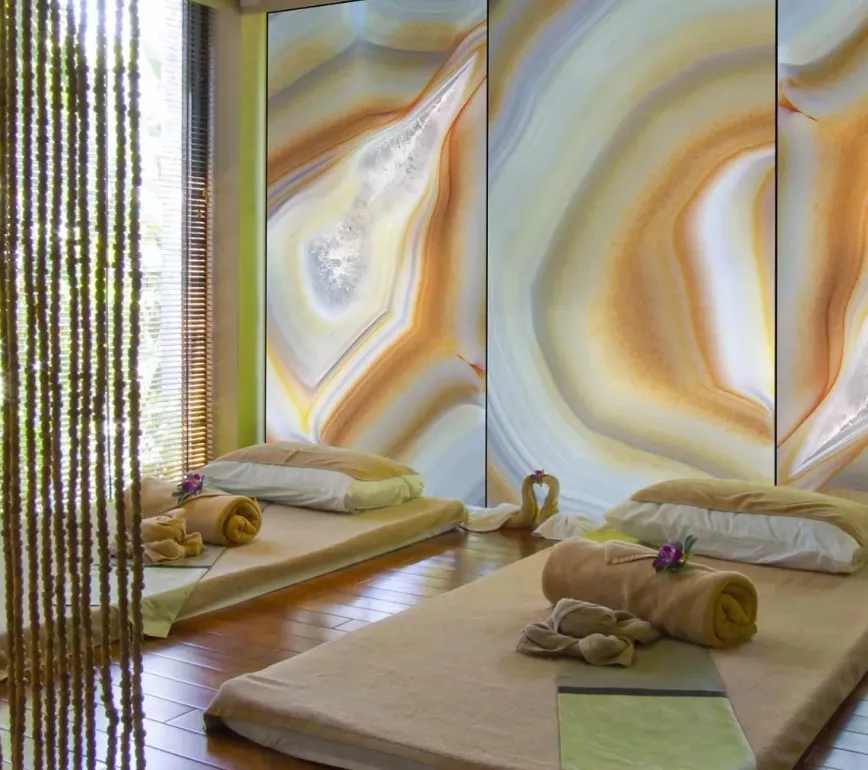
The integrated LED backlighting technology in decorative panels makes it possible to create deeply immersive environments where light doesn't come from point sources but from the entire surface of the wall. This type of diffused lighting reduces visual fatigue and eliminates harsh shadows, creating enveloping atmospheres that are ideal for relaxation.
The ability to adjust both the intensity and color temperature of the backlighting allows the space to be tailored to different types of treatments: warm, soft lighting for relaxing massages, and cooler, more energizing tones for revitalizing treatments.
Aluminum Panels for Wet Zones
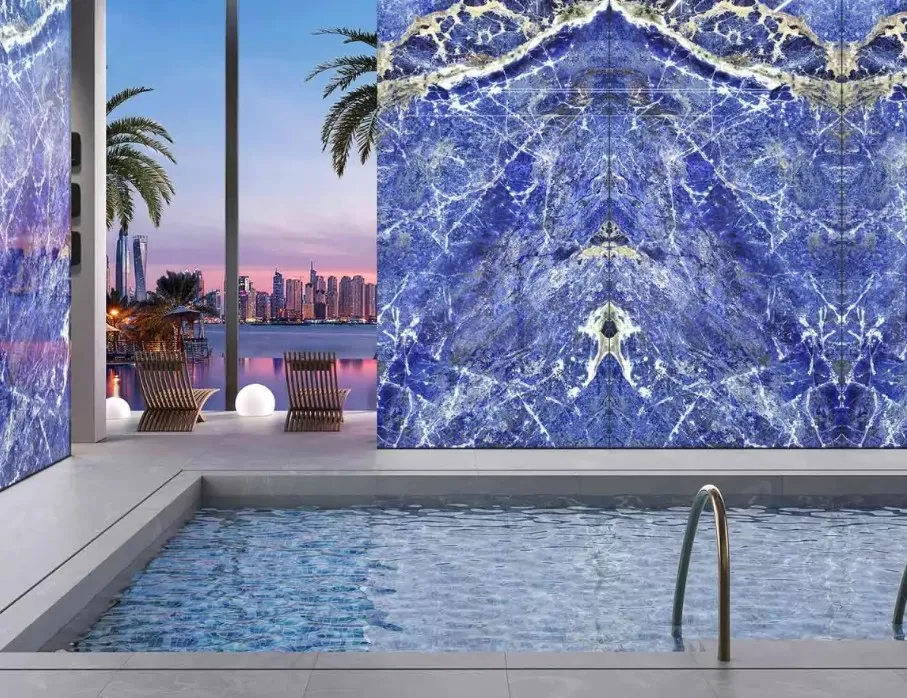
The wet zones of a spa—saunas, steam rooms, experiential showers, and areas around pools and tubs—require materials with exceptional technical performance. Tecnografica's ultralight aluminum decorative panels are perfectly suited to meet these critical demands.
Fully waterproof and resistant to corrosion even in the presence of chlorine and other chemicals used for sanitization, these wall coverings for the spa's wet zone maintain their aesthetic quality even after years of exposure to steam, heat, and constant humidity. The surface can be cleaned and sanitized without damage.
From a design standpoint, aluminum panels make it possible to bring sophisticated graphics and refined textures even into environments where, traditionally, aesthetics had to be sacrificed for functionality, with only standard ceramic tiles as an option.
Decorative Glass Panels for Luminous Elegance
Glass panels with custom graphics represent the premium choice for beauty center and luxury spa design. The transparency or translucency of the glass creates effects of depth and lightness, enhancing the perception of space.
Usable as dividers between different zones (separating the fitness area from the relaxation area, or partitioning treatment rooms), decorative glass panels preserve visual and luminous continuity while clearly defining functionally distinct spaces.
In reception and welcome areas, decorative glass walls featuring elegant patterns immediately convey exclusivity and attention to detail—essential elements for premium positioning in the wellness market.
Specific solutions for wellness environments
Each area of a spa or wellness center has specific functional and emotional requirements that call for targeted wall covering solutions.
Reception and Welcome Areas
The reception is the first point of contact: this is where the journey of letting go of daily stress begins. The space must convey professionalism, cleanliness, and warm hospitality. Spa wallpapers with delicate, refined patterns, neutral palettes with natural accents, and textures that evoke premium natural materials such as linen or polished stone.
Backlit decorative panels behind the reception desk create an elegant, contemporary focal point. Graphics featuring stylized water elements or zen-inspired geometric patterns convey the center's identity without decorative excess.
Massage Rooms and Treatment Cabins
These intimate spaces require deeply relaxing atmospheres that encourage surrender and trust. Decorations for wellness centers in these areas must be discreet yet enveloping, avoiding excessive visual stimuli that could distract the client from focusing on their body and the sensations of the treatment.
Monochromatic palettes in natural tones—beige, taupe, sage green—with delicate textures reminiscent of natural fabrics or organic surfaces. Spa wallpaper can feature highly stylized floral patterns or material textures that add depth without creating visual distraction.
In facial treatment rooms, where lighting must be carefully designed to allow for operational precision, wall coverings in light tones that softly reflect light are preferable. Decorative panels with adjustable backlighting make it possible to adapt the light intensity to the different phases of the treatment.
Relaxation Zones and Meditation Areas
The zones dedicated to pre- or post-treatment rest are the emotional heart of the spa. Here, clients must feel completely shielded from the outside world, pampered in an environment that encourages introspection and mental slowdown.
Large-format nature-inspired graphics—forests, deserted beaches, skies at dawn—turn walls into virtual windows onto serene worlds. Custom wallpapers depicting specific landscapes tied to the center's identity (mountains for alpine spas, Mediterranean beaches for coastal centers) reinforce the sense of place.
Custom decorative panels featuring graphics of bamboo, Japanese zen gardens, and balanced stones: visual archetypes of meditation that automatically activate calm mental states. Indirect lighting built into the panels can simulate sunrise or sunset, syncing biological rhythms with natural cycles.
Fitness Areas and Active Zones
Even in the more dynamic areas of the spa—gyms, yoga rooms, pools—wellness design must maintain a balance between energy and serenity. Here, color palettes can include more vibrant accents while keeping a neutral, natural base.
For yoga and Pilates rooms, nature-inspired graphics with vertical elements (trees, bamboo) draw the eye upward, supporting posture and alignment. Geometric patterns create a sense of order and stability.
In pool areas, resistance to chlorinated water and ease of cleaning are top priorities. Aluminum panels with graphics of waves, water reflections, or seascapes create thematic continuity with the dominant element of the space.
Essential Technical Specifications for Wellness
Beauty without adequate performance is pointless in wellness environments. Materials must meet stringent technical requirements to ensure durability, safety, and hygiene.
Moisture Resistance and Waterproofing
Spas have consistently high humidity levels, with peaks of 100% in specific areas. Wall coverings must be classified as water-repellent or waterproof according to European standards.
| Spa Zone | Average Humidity | Temperature | Recommended Material | Specific Requirements |
| Reception/Waiting | 40-50% | 68-72°F | Vinyl wallpaper / non-woven | Standard cleaning |
| Massage rooms | 50-60% | 72-75°F | Vinyl wallpaper, or H2O water-repellent wallpaper with protective coating. | Essential oil resistance |
| Relaxation zones | 50-60% | 72-77°F | Designer wallpaper / glass panels | Visual comfort |
| Showers/steam rooms | 80-100% | 95-122°F | Aluminum panels | Full waterproofing |
| Pool areas | 70-80% | 79-82°F | Aluminum panels | Chlorine resistance |
Creating Wellness Sanctuaries Through Mindful Design
In today's wellness landscape, where competition is intensifying and client expectations are continually rising, spa interior design is a strategic element that's fundamental to a center's commercial success and reputation.
We've explored how spa wallpapers and spa decorative panels are not merely decorative elements but therapeutic tools that directly influence the mental and physical state of guests. From scientifically studied color palettes to nature-inspired patterns that trigger neurobiological relaxation responses, from textures that evoke natural elements to backlighting technologies that create immersive atmospheres: every design choice contributes to the effectiveness of the wellness experience.
The technical challenges imposed by spa environments—extreme humidity and the need for rigorous sanitization—are met by innovative materials such as ultralight aluminum panels and high-performance vinyl wallpapers, which combine aesthetic beauty and operational functionality without compromise.
The full customization offered by Tecnografica's solutions makes it possible to translate any wellness concept into a distinctive visual reality: from decoration for the spa of a luxury hotel that needs to integrate with the property's brand, to design for an independent beauty center seeking a strong, memorable identity, all the way to wall coverings for the spa's wet zone that demand exceptional technical performance while maintaining aesthetic refinement.
Investing in superior-quality decorations for wellness centers proves strategically advantageous: premium positioning, competitive differentiation, organic marketing through compelling visual content, and durability that reduces operating costs over time. The tangible and intangible benefits more than justify the initial investment, with measurable returns in terms of increased clientele, customer loyalty, and the ability to charge higher rates.
The wellness design of the future is one that thoughtfully integrates aesthetics, functionality, sustainability, and scientific understanding of how environments affect human well-being. Walls cease to be passive boundaries and become active elements of the therapy—surfaces that heal through color, shape, texture, and light.
Want to transform your spa or wellness center into a visually distinctive oasis of regeneration? Contact the Tecnografica team for specialized consulting and discover how custom wallpapers and decorative panels can elevate the wellness experience you offer your clients, creating environments that heal body and mind through the power of mindful design.