

24 MAR
Aluminum ventilated facades represent today's most advanced architectural solution for combining energy efficiency, contemporary aesthetics, and environmental sustainability in modern construction. This technical overview analyzes how ventilated facade systems work, exploring performance advantages such as energy consumption reductions of up to 30%, superior acoustic insulation, and moisture protection. We will examine innovative applications featuring designer aluminum panels, installation technologies, certified substructures, and customizable finishes ranging from textures that mimic natural materials to cutting-edge geometric patterns. With particular focus on architectural trends that favor structural lightness, long-term durability, and maximum aesthetic flexibility, this article provides a comprehensive guide for designers, engineers, and builders working in contemporary construction and the energy retrofitting of existing buildings.
How ventilated facades work
The ventilated facade system is based on a straightforward yet highly effective thermodynamic principle: the creation of an air gap between the outer cladding and the building's load-bearing wall. This ventilation cavity, typically between 3 and 10 centimeters thick, triggers a natural airflow that produces multiple beneficial effects on energy performance and indoor comfort.
During the summer months, the air inside the cavity heats up due to solar radiation on the outer cladding, decreasing in density and generating an upward convective current. This continuous airflow carries away accumulated heat, preventing it from being transferred to the interior wall structure and drastically reducing the thermal load on living spaces. The natural chimney effect produced in this way can lower the surface temperature of interior walls by up to 8–10°C compared to a traditional non-ventilated facade.
In winter, the cavity acts as an additional thermal buffer, reducing heat loss from the inside to the outside. The insulating layer positioned on the load-bearing wall, protected by the ventilated outer cladding, retains its performance characteristics over time since it is not exposed to wetting and drying cycles that would otherwise degrade its effectiveness.
Performance and economic benefits of aluminum facade cladding
Aluminum facade claddings within ventilated systems offer quantifiable benefits that positively impact both the building's energy management and occupant comfort. Research conducted on buildings equipped with this system documents reductions in summer air conditioning consumption ranging from 25% to 35%, with higher peaks in buildings facing south and southwest. At the same time, winter heating costs decrease by an average of 15–20% thanks to the improved thermal protection of the building envelope.
Acoustic insulation is an additional benefit that is often underestimated. The multilayer structure of the ventilated facade — made up of the outer cladding, air cavity, thermo-acoustic insulation, and load-bearing wall — creates an effective barrier against noise coming from outside. Sound level tests demonstrate noise reduction of between 40 and 50 decibels, making these systems ideal for buildings located in noisy urban environments or near transportation infrastructure.
Moisture protection is a crucial factor in the long-term durability of a building. Aluminum ventilated facade panels, being completely waterproof and unaffected by water, effectively shield the underlying wall structure from weathering. The continuous ventilation of the cavity also prevents interstitial condensation — a phenomenon that can over time cause degradation of insulating materials, mold growth, and a decline in overall thermal performance.
Aluminum panels: technical features and innovative applications
Modern aluminum ventilated facade panels represent a significant technological advancement over traditional materials. With extremely low thicknesses down to just 1.2 mm and specific weights of approximately 3.9 kg/m², these exterior facade panels combine exceptional lightness with high mechanical strength — characteristics that may seem contradictory but coexist thanks to aluminum's intrinsic properties and advanced manufacturing processes.
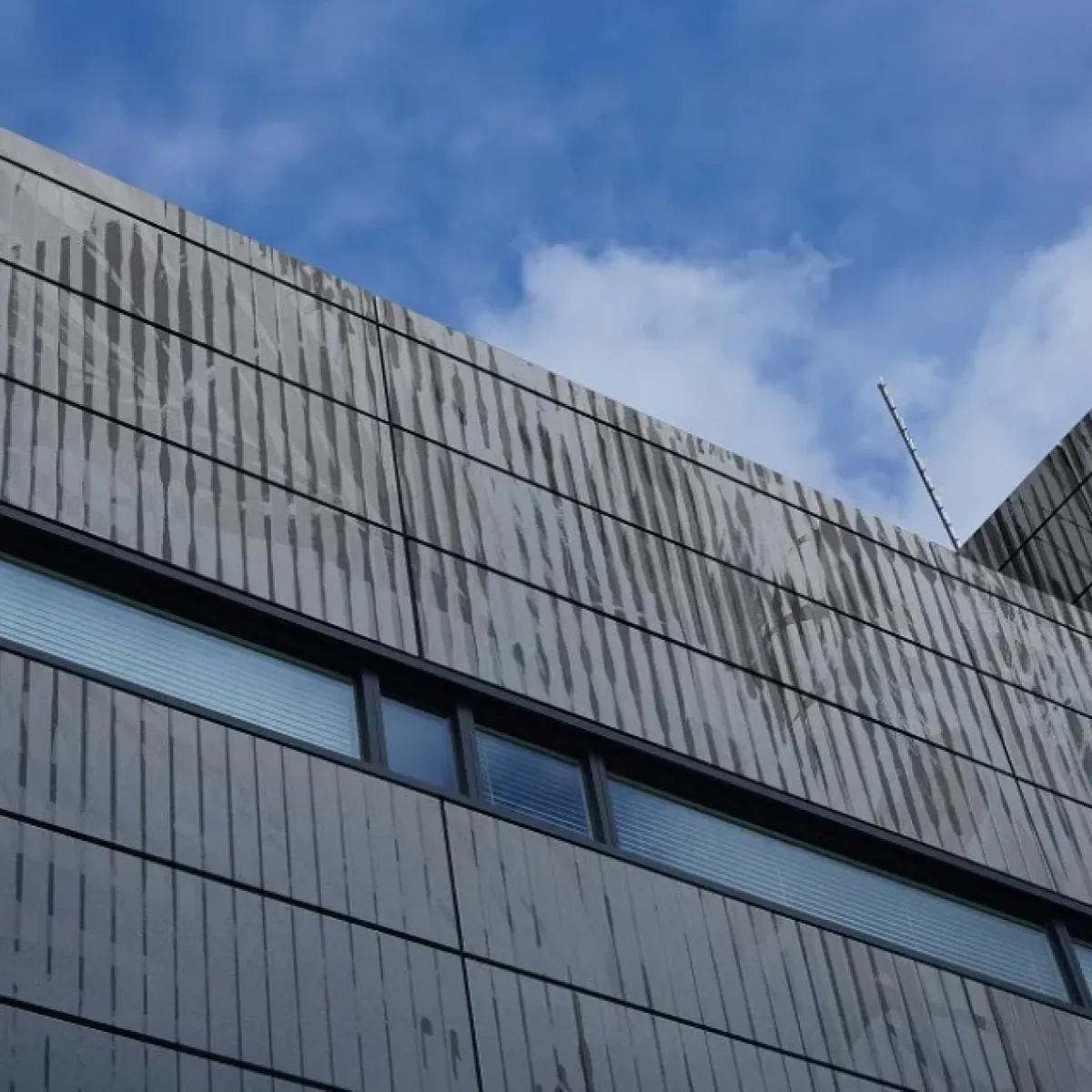
High-definition digital printing technology applied to aluminum makes it possible to reproduce any type of graphic, texture, or pattern on these surfaces with color accuracy and detail that would have been unthinkable just a few years ago. Decorative exterior panels can thus perfectly replicate natural materials such as stone, marble, aged wood, or industrial concrete, or offer contemporary graphic solutions, abstract geometric patterns, or even custom artistic reproductions that transform the building envelope into a surface of communication and architectural identity.
Ventilated facade systems: substructures and installation methods
The effectiveness of an aluminum ventilated facade system depends critically on the proper design and installation of the load-bearing substructure. Certified substructures, such as the CROSSFIX® system developed by EJOT, ensure mechanical integrity, compensation for dimensional tolerances in the existing masonry, and the creation of an optimal ventilated cavity.
These modular systems are designed to evenly distribute static and dynamic loads (wind, snow, thermal expansion) across the building's load-bearing structure, using extruded aluminum or galvanized steel profiles anchored to the masonry with chemical or mechanical anchors sized according to structural calculations specific to each project. The ability to make micrometric adjustments along three axes allows for compensation of irregularities in the masonry substrate, ensuring perfect alignment and flatness of the final cladding.
Materials and finishes for decorative facade panels
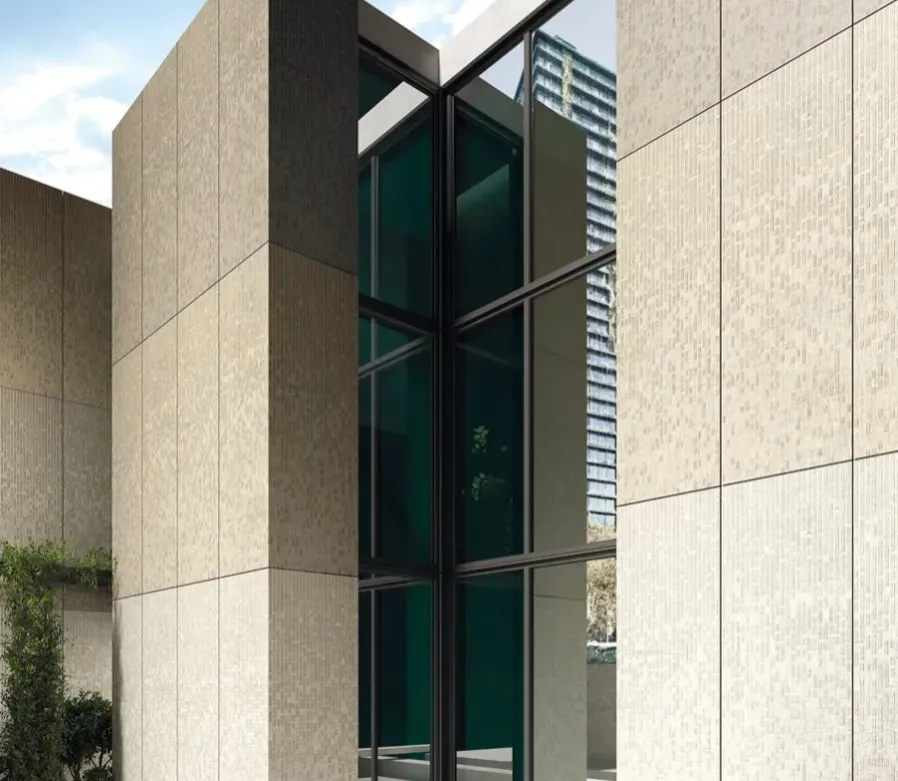
The range of materials and finishes available for aluminum decorative facade panels has expanded considerably in recent years, offering designers an unprecedented array of aesthetic and performance options. Surface finishes range from ultra-reflective options that maximize solar light reflection while reducing thermal absorption, to matte and textured surfaces that add material depth and minimize unwanted glare.
| Finish Type | Performance Characteristics | Recommended Applications |
| Super Glossy | High solar reflectance, UV resistance, easy to clean. Mirror-like effect | Commercial buildings, retail spaces, iconic architecture in urban settings |
| Matte | Reduced glare, deep and uniform colors, high graphic definition | Residential construction, public buildings, sensitive historic contexts |
| 3D Textured | Tactile and visual depth, realistic replication of natural materials | Hospitality, high-end residential, architectural renovation projects |
| Stone/Marble Effect | Photorealistic reproduction of natural veining, reduced weight compared to real stone | Residential facades, office buildings, conservation projects on historic structures |
Design ventilated facades: aesthetic integration in contemporary architecture
The concept of design ventilated facades represents the evolution of the facade from a technical-functional element to an aesthetic and expressive component of architecture. Contemporary architects are increasingly turning to these systems not only for their undisputed performance qualities, but also as a tool for design communication and the definition of a building's visual identity.
The graphic customization options offered by digital printing on aluminum make it possible to create fully customized solutions that engage with the urban context, reference elements of local history, or express the client's values. Geometric patterns that create effects of depth and movement, color gradients that shift along the height of the building in response to natural light, reproductions of a brand's graphic and color elements that make the facade an integral part of corporate communication — the creative applications are limited only by the designer's imagination.
Numerous completed architectural projects demonstrate how the integration of custom aluminum panels into ventilated facade systems can radically transform the appearance of existing buildings during energy retrofitting projects, breathing new life and a contemporary feel into outdated structures without altering their original volumes.
Sustainable architecture and environmental certifications
The contribution of aluminum ventilated facades to sustainable architecture protocols is recognized and valued by the leading international environmental certification systems. Their superior energy performance makes it possible to earn significant credits in the "Energy and Atmosphere" categories of LEED protocols, while the durability of the materials and reduced maintenance requirements positively impact building lifecycle assessments (LCA).
The aluminum used in aluminum facade claddings is fully recyclable at the end of the cladding's service life — a characteristic of growing importance in circular economy policies applied to the construction sector. The aluminum recycling process requires only 5% of the energy needed for primary production, contributing significantly to the reduction of the overall carbon footprint of the building project (source: European Aluminium).
Facade energy savings: measurable data and performance
The energy savings generated by adopting ventilated facade systems can be quantified through dynamic energy simulations and verified through post-installation monitoring. Studies conducted on buildings retrofitted with opaque ventilated facades document reductions in heating and cooling consumption typically ranging from 20% to 50%, with peaks of 40–50% during the summer months in Mediterranean climates. Absolute values in kWh/m² vary significantly depending on the climate context, building type, and HVAC system in use. (source: EU Cordis)
The return on investment, calculated by factoring in energy savings and available tax incentives for energy retrofitting, generally falls within a timeframe of 10–15 years for residential buildings, dropping to 7–10 years for commercial buildings with intensive HVAC usage. These payback periods are further shortened by the increase in property value resulting from the improved energy rating achieved, which can translate into a market value increase of between 5% and 15%.
Innovative applications: ultralight façade and the new generation of ultra-lightweight panels
Technological innovation in the ventilated facade cladding sector has reached a turning point with the development of next-generation aluminum panels characterized by extreme lightness and optimized mechanical performance. At just 1.2 mm thick and weighing only 3.9 kg/m², these exterior facade panels are revolutionizing jobsite logistics by dramatically reducing transportation and handling costs.
Compatibility with certified substructures specifically engineered for these ultra-lightweight materials ensures certified structural performance even under high wind loads, making these systems suitable for tall buildings in exposed locations. The ease of installation translates into a reduction in construction time of up to 40% compared to traditional systems using stone or heavier composite panels, with clear economic and organizational benefits for both clients and contractors.
Durability, maintenance and long-term performance
The durability of aluminum facade claddings is backed by accelerated aging tests that simulate decades of exposure to weathering. Aluminum panels with certified surface finishes demonstrate corrosion resistance, color stability, and retention of mechanical properties for periods exceeding 30–40 years, making them highly cost-effective long-term investments when assessed on an overall cost-benefit basis.
Maintenance requirements are extremely low and generally limited to periodic washing with water and mild detergents to remove surface deposits of dust and atmospheric pollutants. Aluminum's inherent impermeability and the protection provided by surface treatments prevent moisture penetration, efflorescence, microorganism growth, and other forms of biological degradation common in porous materials such as natural stone or concrete.
The ability to access individual panels for targeted replacement in the event of localized damage is a further advantage of the system. Unlike monolithic claddings or exterior insulation and finish systems (EIFS), a damaged panel can be removed and replaced without the need to dismantle large sections of the facade, minimizing both the time and cost of any repair work.
Technical design and installation considerations
Designing an efficient ventilated facade system requires careful attention to multiple technical variables. The sizing of the ventilated cavity must account for the building's height, facade orientation, local climatic conditions, and expected heat flows. Cavities that are too narrow reduce the chimney effect and ventilation efficiency, while oversized ones can generate turbulence that compromises effective heat dissipation.
The lower air intake opening and the upper air exhaust opening must be appropriately sized to ensure sufficient airflow without creating excessive velocities that could generate noise or draw rainwater into the system. Ventilation grilles with purpose-designed geometries and small-animal intrusion barriers complete the system, ensuring long-term functionality and safety.
Installation of the insulating layer on the existing masonry must follow strict thermal continuity criteria, avoiding thermal bridges at balconies, columns, ring beams, and other structural elements that penetrate the building envelope. The use of insulating materials with adequate vapor permeability allows moisture vapor to migrate from the interior to the exterior, preventing interstitial moisture buildup.
Standards, certifications and compliance for ventilated facade systems
Ventilated facade systems must comply with national and European technical standards governing structural performance, fire behavior, water tightness, and resistance to weathering. Metal panels for exterior cladding are classified according to EN 13501-1 with regard to fire reaction — a critical characteristic especially for public buildings and structures subject to stringent fire safety regulations.
Wind resistance of ventilated facades must be verified through structural calculations in accordance with the Eurocodes, taking into account the pressure and suction forces exerted by wind on the exposed surface based on the building's geometry, height above ground, and climatic installation zone. Full-scale prototype load testing validates the anchoring systems and the load-bearing capacity of the substructures.
Product certifications issued by independent third-party bodies attest to the conformity of materials and complete systems with the declared performance requirements, providing designers and clients with assurances regarding the quality and reliability of the chosen solution. Environmental Product Declarations (EPDs) quantify environmental impacts across the entire lifecycle, supporting informed, sustainability-oriented decision-making.
Economic considerations and incentives for energy retrofitting
Installation projects involving aluminum ventilated facades on existing buildings fall within the categories of energy retrofitting eligible for tax incentives provided under Italian and European regulations. Tax deductions for energy efficiency improvements, targeted construction bonuses, and subsidized financing programs for sustainability make these projects economically accessible even for private clients and residential condo associations.
The improvement in the certified energy performance rating (APE) achieved through the installation of an efficient ventilated facade generates real estate value that can be directly monetized in the event of a sale or lease, while also structurally reducing the building's operating costs over the entire useful life of the system. These direct and indirect economic benefits must be factored into any comprehensive assessment of the investment's overall viability.
Aluminum ventilated facades represent a mature and proven architectural solution that optimally balances performance, aesthetic, economic, and environmental requirements. Their ability to reduce a building's energy consumption by up to 30%, dramatically improve indoor comfort, protect the building envelope from weathering, and offer unlimited aesthetic customization options makes these systems the preferred choice for new construction and energy retrofitting of existing buildings.
The technological evolution that has led to the development of ultra-lightweight, fully recyclable decorative exterior panels — customizable through high-definition digital printing — further expands the application scope of these systems, making them accessible even for projects involving buildings with limited remaining load-bearing capacity or particular logistical constraints.
For designers, engineers, and builders working in sustainable contemporary construction, aluminum ventilated facades are an indispensable design tool for achieving the ambitious energy efficiency targets required by European nearly zero-energy building (nZEB) regulations, without sacrificing expressive freedom or architectural quality. The integration of these technologies into BIM-based integrated design workflows, and the growing availability of environmental product certifications, facilitate informed and well-documented decision-making that maximizes long-term investment value — contributing to the creation of a more efficient, resilient, and sustainable built environment.